
This module prepares learners to apply for entry-level jobs in logistics and supply chain management. It explains how to create a professional resume, communicate qualifications confidently, prepare for HR and technical interviews, and demonstrate workplace readiness.
Learners will practise writing a resume, preparing a professional self-introduction, answering common interview questions, and presenting their skills in a clear and honest manner.
By the end of this module, learners will be able to:
Create a clear, professional, job-oriented resume.
Identify relevant skills for logistics and supply chain roles.
Write a suitable career objective or professional summary.
Prepare an effective self-introduction.
Answer common HR and technical interview questions.
Use structured examples to explain their abilities.
Demonstrate professional interview etiquette.
Prepare for entry-level job opportunities.
A resume is a professional document that presents a candidate's education, skills, experience, achievements, projects, and suitability for a job.
Recruiters use resumes to assess whether a candidate meets the basic requirements of a position.
1. Contact Information
Full name
Professional phone number
Professional email address
City and state
LinkedIn profile, if available and relevant
2. Career Objective or Professional Summary
A career objective briefly describes the type of role a candidate seeks and how their skills can contribute to the organization.
Sample objective:
"Motivated and detail-oriented candidate seeking an entry-level opportunity in logistics and supply chain management. Eager to apply knowledge of inventory management, warehouse operations, documentation, and Excel while learning industry best practices."
3. Education
Include:
Qualification or degree
Institution name
Year of completion
Relevant academic details, where appropriate
4. Relevant Skills
Examples for entry-level logistics candidates:
Inventory and stock record awareness
Warehouse operations fundamentals
Basic procurement knowledge
Transportation and delivery coordination
Logistics documentation awareness
Microsoft Excel and data entry
Email and professional communication
Teamwork and problem-solving
Attention to detail and time management
Only list skills that you can explain or demonstrate honestly.
5. Internship or Work Experience
For each relevant experience, mention the organization, role, dates, responsibilities, and genuine achievements.
Candidates without formal experience can highlight academic projects, practical exercises, volunteering, or relevant training.
6. Projects and Training
Examples include:
Inventory tracking using Excel
Warehouse process mapping
Delivery performance analysis
Supplier comparison exercise
Logistics documentation practice
Explain what you did, which tools you used, and what you learned.
7. Certifications and Achievements
Include relevant completed courses, certifications, awards, or achievements. Do not claim a certification that you have not earned.
A good resume should be:
Clear, concise, and easy to read.
Tailored to the job description.
Free from spelling and grammatical errors.
Consistent in font, spacing, dates, and formatting.
Focused on relevant skills and accomplishments.
Honest and accurate.
Saved in the file format requested by the employer.
Avoid:
Using an unprofessional email address.
Adding false experience or qualifications.
Including irrelevant personal information.
Using complicated designs that reduce readability.
Listing skills without being able to explain them.
Submitting a resume with incorrect contact details.
Sending the same generic resume for every role without reviewing the job requirements.
Entry-level opportunities may include:
Logistics Coordinator Trainee
Warehouse Executive Trainee
Inventory Assistant
Supply Chain Assistant
Procurement Assistant
Transport Coordinator
Documentation Executive
Operations Support Executive
Dispatch Assistant
Customer Service Executive in logistics
Job titles and eligibility requirements vary by employer. Always read the job description before applying.
Suppose a vacancy asks for Excel skills, inventory awareness, and attention to detail.
A candidate can highlight a relevant project such as maintaining a sample stock register in Excel, checking discrepancies, and preparing a basic inventory report.
The candidate should describe the actual work completed rather than exaggerating their experience.
A self-introduction is often one of the first parts of an interview. It should be clear, relevant, confident, and approximately 45–90 seconds long.
Greeting and name.
Educational background.
Relevant training or knowledge.
Key skills or practical project.
Career interest and willingness to learn.
"Good morning. Thank you for giving me this opportunity to introduce myself. I have completed my education in [qualification] and have developed an interest in logistics and supply chain management. During my training, I learned the fundamentals of inventory management, warehouse operations, transportation, documentation, and Excel. I am detail-oriented, willing to learn, and comfortable working as part of a team. I am looking for an entry-level opportunity where I can apply my knowledge, develop practical skills, and contribute to the organization's operations."
Personalize this introduction with your real qualification, training, and skills. Do not memorize it mechanically; practise speaking naturally.
Explain your education, relevant skills, training, and career interest. Keep your answer structured and job-related.
Discuss your interest in coordinating goods, managing inventory, supporting deliveries, solving operational problems, or improving processes.
Choose genuine strengths such as attention to detail, punctuality, teamwork, adaptability, or willingness to learn. Support them with a short example.
Choose a real development area and explain the steps you are taking to improve it. Avoid presenting a false or exaggerated answer.
Connect your relevant knowledge, learning attitude, reliability, communication, and readiness to contribute to the responsibilities described in the job posting.
Explain how you prioritize tasks, communicate delays, follow procedures, and ask for support when needed. Give a real example if possible.
Answer honestly. Explain your ability to coordinate with others and clarify any genuine availability constraints.
Describe a realistic goal, such as becoming proficient in logistics operations, gaining practical experience, and taking on greater responsibility.
Candidates applying for logistics and supply chain roles should revise basic industry concepts and practise explaining them in simple language.
Q1. What is logistics?
Logistics involves planning, implementing, and controlling the movement and storage of goods and related information from origin to destination.
Q2. What is supply chain management?
Supply chain management coordinates activities such as sourcing, procurement, production, inventory, transportation, and delivery to meet customer requirements.
Q3. What is inventory management?
Inventory management involves monitoring and controlling stock levels to help ensure product availability while minimizing unnecessary stock and associated costs.
Q4. What is a purchase order (PO)?
A purchase order is a formal document issued by a buyer to a supplier specifying the goods or services being ordered and relevant terms.
Q5. What is a warehouse management system (WMS)?
A WMS is software used to support and manage warehouse activities such as receiving, put-away, storage, picking, packing, and dispatch.
Q6. What is proof of delivery (POD)?
Proof of delivery is a record or confirmation that a shipment has been delivered to the intended recipient.
Q7. What is the difference between FIFO and FEFO?
FIFO means First In, First Out: older received stock is issued first. FEFO means First Expired, First Out: stock with the earliest expiry date is issued first.
Q8. What is an on-time delivery KPI?
It measures the proportion of deliveries completed within the agreed delivery time or defined on-time window.
Q9. How can Excel support logistics operations?
Excel can help maintain stock records, track deliveries, compare suppliers, calculate totals, filter data, and prepare basic reports.
Q10. What would you do if physical stock did not match the system quantity?
Recheck the count and item details, review relevant transactions and records, inform the responsible supervisor, and follow the organization's discrepancy-resolution process.
The STAR method helps candidates organize answers about past experiences.
S – Situation: Explain the context.
T – Task: Describe your responsibility.
A – Action: Explain the steps you took.
R – Result: Share the outcome or lesson learned.
Question: Tell me about a time you solved a problem.
Situation: During a training exercise, the stock register showed a quantity different from the physical count.
Task: Identify the discrepancy and prepare an accurate report.
Action: Recounted the items, checked the entries, and reported the difference to the trainer.
Result: The discrepancy was identified for correction, and I learned the importance of accurate records.
Use your own genuine experience. Academic exercises and training activities are suitable examples for freshers.
Read the job description and research the employer.
Revise relevant logistics concepts.
Carry or prepare the requested documents.
Test your internet connection for an online interview.
Plan your route and arrive on time for an in-person interview.
Prepare two or three thoughtful questions for the interviewer.
Greet the interviewer politely.
Listen carefully and answer the question asked.
Speak clearly and professionally.
Maintain appropriate eye contact and positive body language.
Admit when you do not know an answer and explain how you would learn it.
Avoid criticizing previous employers, teachers, or colleagues.
Do not invent experience or qualifications.
Thank the interviewer for their time.
Send a brief follow-up message if appropriate.
Follow the employer's instructions regarding next steps.
Depending on the employer's requirements, candidates may need:
Updated resume
Educational certificates and mark sheets
Relevant training or certification records
Identity and eligibility documents, when requested through appropriate channels
Internship or experience certificates, if applicable
References, if requested
Submit only the information and documents required through legitimate employer channels. Do not share sensitive personal documents with unverified recruiters.
Prepare a resume for an entry-level logistics role.
Checklist:
Contact information is correct.
Career objective matches the role.
Education details are accurate.
Relevant skills are included.
Projects or training are described clearly.
Spelling and grammar are checked.
The final document is easy to read.
Prepare a 45–90 second introduction and practise delivering it aloud. Ask a peer or trainer to review clarity, confidence, relevance, and speaking pace.
Practise answering:
Tell me about yourself.
Why did you choose logistics?
What are your strengths?
How do you handle pressure?
Why should we hire you?
Explain the following without reading from notes:
Logistics versus supply chain management
FIFO versus FEFO
Purchase order and proof of delivery
Inventory discrepancy handling
The purpose of WMS and Excel in logistics
Choose an entry-level logistics vacancy. Identify five required skills and show where each skill is demonstrated in your resume. Do not add a skill unless you can support the claim honestly.
Before completing this module, confirm that you can:
Prepare a professional resume.
Identify suitable entry-level job roles.
Deliver a clear self-introduction.
Answer common HR interview questions.
Explain basic logistics and supply chain concepts.
Use the STAR method to structure examples.
Demonstrate professional interview etiquette.
Prepare the documents needed for a job application.
A strong resume helps a recruiter understand your suitability for a role. Interview preparation helps you communicate your knowledge, skills, attitude, and potential. For freshers, honesty, relevant fundamentals, practical examples, professional behaviour, and a willingness to learn are particularly important.
Next Module: Module 12 – Mock Interview & Industry Readiness Assessment.
 8 hours
A practical, self-paced course designed to prepare Diploma Mechanical Engineering students for entry...
 8-10 Hours
Banking & Finance – Entry-Level Job Readiness is a practical, self-paced program designed to build j...
 3 MONTHS
Learn Artificial Intelligence from fundamentals to advanced Agentic AI through 8 structured modules...
 15 Days
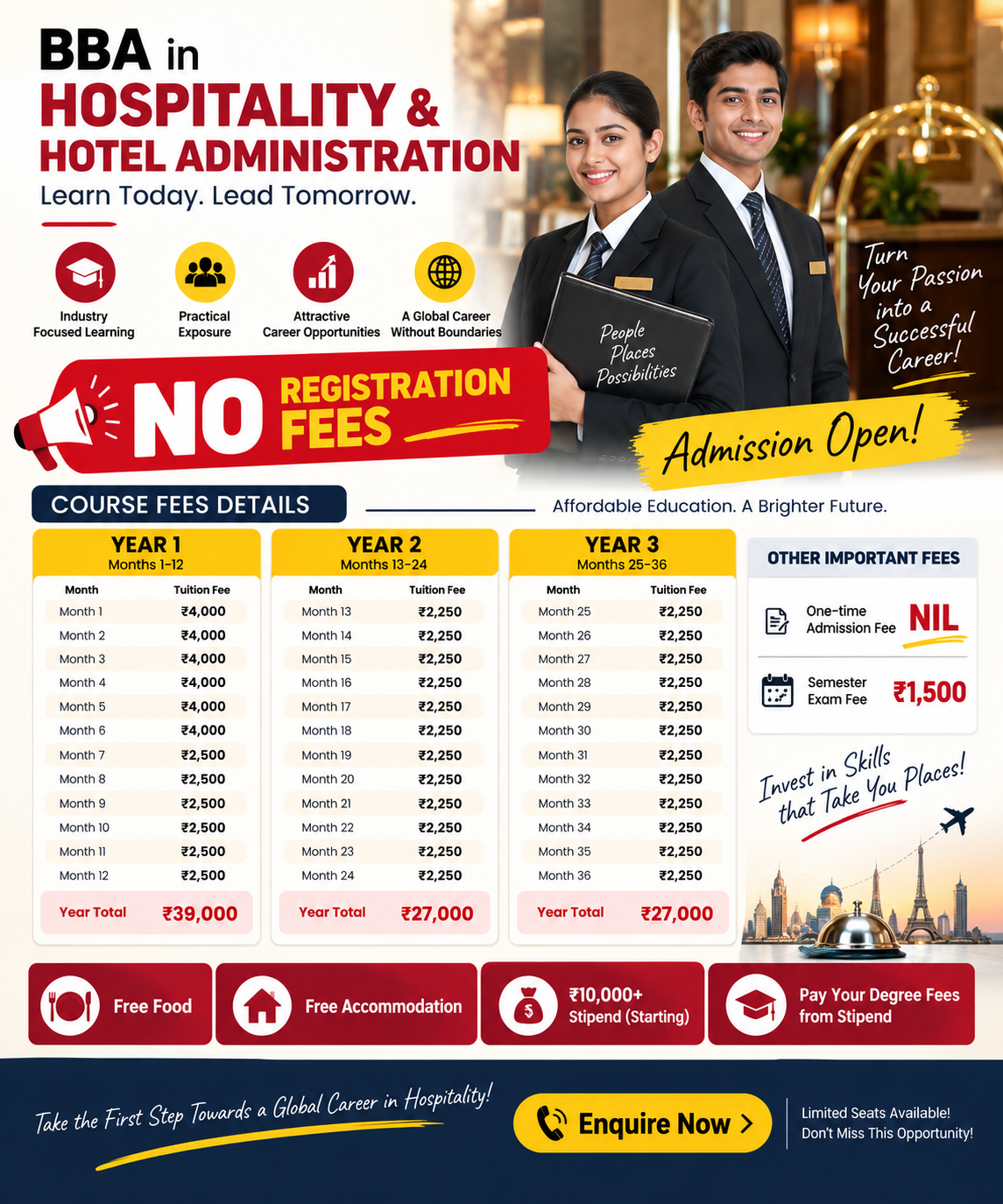
BVoc in Hospitality and Hotel Management एक 3 वर्षीय करियर-केंद्रित स्नातक कार्यक्रम है, जो छात्रों...
 1 Year
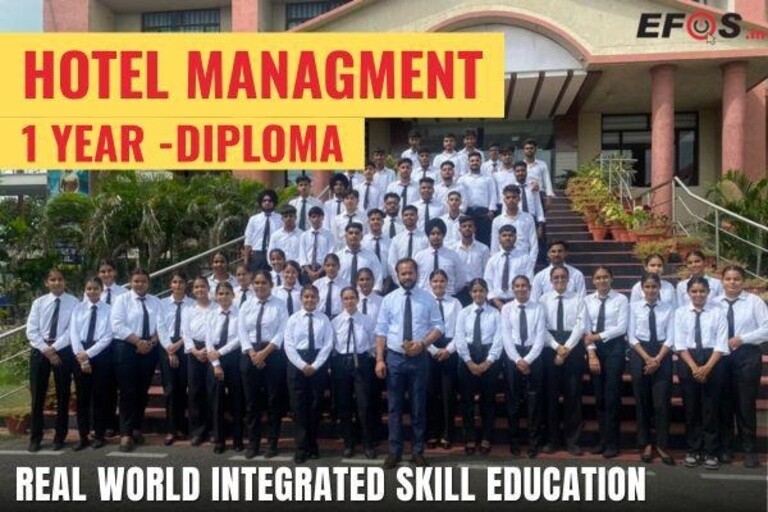
Hotel Management Diploma (RISE Program)- Learn & Earn Mode RISE: Real-world Integrated Skills for...
 1 MONTHS
Digital literacy is the ability to use digital devices, the internet, and online tools safely and ef...