Welcome to Module 2 of the EFOS Logistics & Supply Chain Management course.
This module introduces the essential terminology used in logistics, procurement, inventory management, warehousing, transportation, and distribution. Understanding these terms helps students communicate effectively with colleagues, suppliers, transporters, warehouse teams, and customers.
The module focuses on practical definitions, differences between commonly confused terms, and examples from everyday logistics operations.
By the end of this module, students will be able to:
Explain common logistics and supply chain terms.
Identify the roles of suppliers, manufacturers, distributors, retailers, and customers.
Understand lead time, cycle time, order fulfilment, demand, supply, capacity, and throughput.
Differentiate between inbound, outbound, and reverse logistics.
Understand shipment, consignment, dispatch, delivery, and transit time.
Explain SKU, MOQ, EOQ, safety stock, reorder point, stockout, and overstock.
Apply basic terminology to practical logistics situations.
Supplier: Provides materials, products, or services.
Vendor: A business or individual that supplies goods or services.
Manufacturer: Converts raw materials or components into finished products.
Distributor: Moves products from manufacturers toward retailers or other customers.
Wholesaler: Purchases products in bulk and resells them, often to retailers.
Retailer: Sells products directly to end customers.
Customer: The person or organization purchasing or receiving a product or service.
Lead Time: The time between initiating a process and completing the relevant outcome, depending on the context.
Cycle Time: The time required to complete a defined process or operational cycle.
Order Fulfilment: The activities involved in processing an order, preparing the goods, and delivering them to the customer.
Demand: The quantity of a product or service customers require.
Supply: The quantity of a product or resource available to meet demand.
Capacity: The maximum output or workload a resource or operation can handle under specified conditions.
Throughput: The quantity of goods or work processed during a specified period.
Inbound Logistics: The movement and handling of materials coming into a business.
Outbound Logistics: The movement and delivery of products leaving a business.
Reverse Logistics: The movement of goods back from customers or downstream locations for returns, repair, recycling, or other recovery activities.
Transportation: The movement of goods between locations.
Distribution: The activities involved in moving products through a network toward customers.
Freight: Goods transported commercially, or the charge associated with transporting them, depending on the context.
Shipment: Goods prepared or sent for transportation.
Consignment: Goods entrusted or assigned for transport or delivery under an arrangement.
Dispatch: The release or sending of goods from a facility.
Delivery: The transfer or arrival of goods at the intended destination or recipient.
Transit Time: The time goods spend moving between a dispatch point and destination, according to the applicable measurement.
Route Planning: Selecting a suitable path or sequence of stops for transportation.
SKU (Stock Keeping Unit): A unique identifier used to distinguish a particular product or stock item.
MOQ (Minimum Order Quantity): The smallest quantity a supplier is willing to accept for an order under specified terms.
EOQ (Economic Order Quantity): An inventory planning concept used to estimate an order quantity that balances ordering and holding costs under stated assumptions.
Safety Stock: Additional inventory held to protect against uncertainty in demand or supply.
Reorder Point: The inventory level at which replenishment should be initiated, considering demand during lead time and any planned safety stock.
Stockout: A situation in which the required item is unavailable when needed.
Overstock: Inventory exceeding the quantity required for expected needs or the organization's target stock level.
Buffer Stock: Inventory held as a reserve to help absorb fluctuations or uncertainty.
An online retailer receives an order for a product.
The retailer checks the product's SKU and available inventory.
If stock is insufficient, the inventory team checks the reorder point and initiates replenishment when appropriate.
The supplier delivers the product, contributing to inbound logistics.
The warehouse receives, checks, and stores the item.
The order is picked, packed, and dispatched.
A transporter moves the shipment along a planned route.
The customer receives the order.
If the product is returned, reverse logistics may be required.
This example demonstrates how terminology connects with actual supply chain activities.
Choose a product such as a mobile phone, packaged food item, or pair of shoes.
Identify:
The supplier and manufacturer.
The distributor, wholesaler, retailer, and customer, where applicable.
The inbound and outbound logistics activities.
The SKU and possible reorder point.
The dispatch, transit, and delivery stages.
What could cause a stockout or overstock.
How a return would be handled through reverse logistics.
Students should be able to define the key terms in their own words and distinguish between commonly confused concepts, particularly:
Logistics and distribution.
Inbound and outbound logistics.
Dispatch and delivery.
Lead time and transit time.
Safety stock and reorder point.
Stockout and overstock.
MOQ and EOQ.
Key Takeaway: Understanding logistics terminology builds the foundation for learning procurement, inventory management, warehousing, transportation, documentation, and supply chain performance.
Next Module: Procurement & Supplier Management.
 8 hours
A practical, self-paced course designed to prepare Diploma Mechanical Engineering students for entry...
 8-10 Hours
Banking & Finance – Entry-Level Job Readiness is a practical, self-paced program designed to build j...
 3 MONTHS
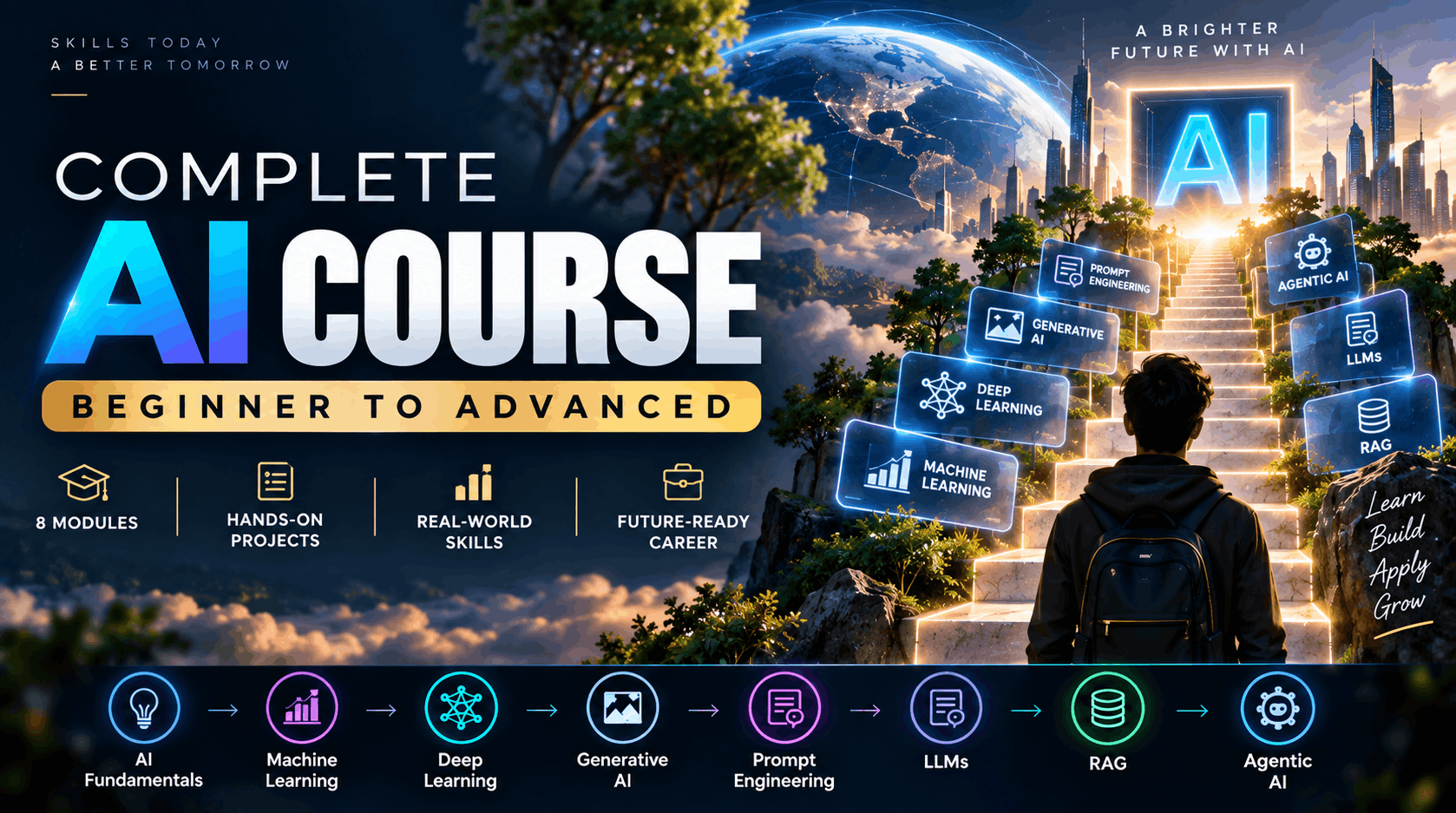
Learn Artificial Intelligence from fundamentals to advanced Agentic AI through 8 structured modules...
 15 Days
BVoc in Hospitality and Hotel Management एक 3 वर्षीय करियर-केंद्रित स्नातक कार्यक्रम है, जो छात्रों...
 1 Year
Hotel Management Diploma (RISE Program)- Learn & Earn Mode RISE: Real-world Integrated Skills for...
 1 MONTHS
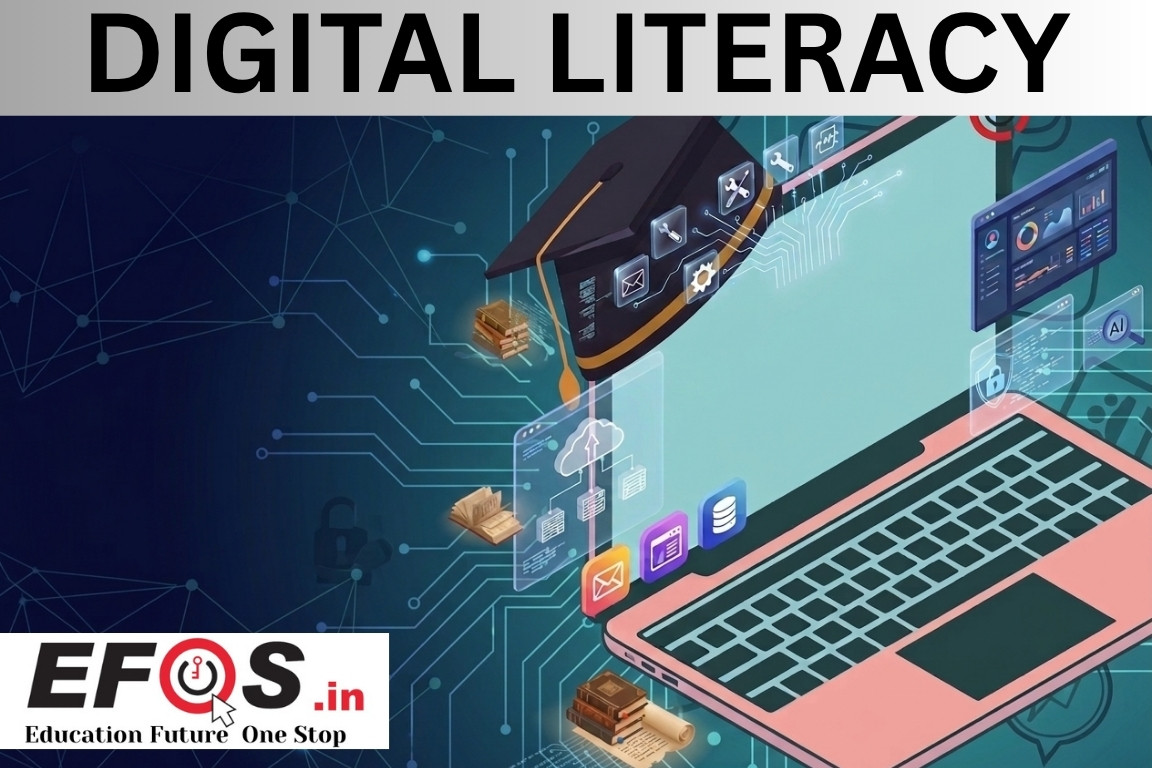
Digital literacy is the ability to use digital devices, the internet, and online tools safely and ef...