
Germany is more than a destination for higher education. For Indian students and young professionals, it can be a pathway to internationally relevant skills, structured vocational training, professional experience, and long-term career development.
But is Germany the right choice for you? Should you pursue higher education, apply for a job, or consider vocational training through the German Ausbildung system?
In this article, EFOS.in explores 10 reasons why Germany deserves a place on your career-planning list — along with the important things you should understand before making the move.
Germany is internationally known for its manufacturing, engineering, automotive, chemical, logistics, healthcare, and technology industries.
Companies across these sectors require people with different combinations of technical knowledge, practical skills, professional qualifications, and work experience.
For Indian candidates, this creates several career pathways to investigate, depending on their education and experience.
Examples include:
Mechanical and electrical engineering
Automotive technology and mechatronics
Information technology and software development
Logistics and supply chain management
Healthcare and nursing
Hospitality and selected skilled trades
However, opportunities vary by occupation, region, employer, qualifications, and language ability. Germany should be approached as a career destination to research carefully, not as a guarantee of employment.
One of Germany's key attractions is that there is no single route for everyone.

Pursue an eligible bachelor's, master's, or other academic programme to develop subject knowledge and qualifications.

Undertake vocational training that combines workplace learning with structured instruction. Company-based Ausbildung positions generally include a training allowance.

Qualified candidates may explore suitable job offers and the relevant work-visa pathway, subject to the applicable requirements.
Germany has official immigration pathways for qualified professionals and vocational trainees. Each pathway has different eligibility and documentation requiremen
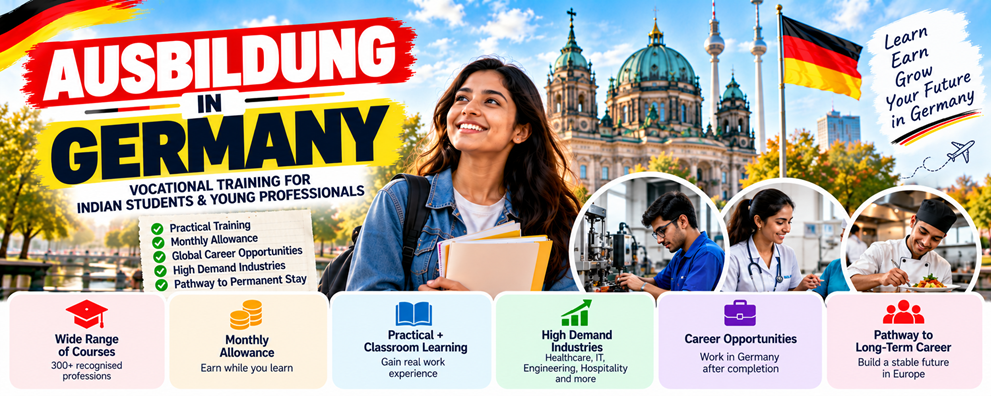
For young Indians who prefer practical training over a purely academic route, Ausbildung can be an option worth exploring.
Germany's dual vocational training system typically combines:
Practical learning at a company
Theoretical instruction at a vocational school
Training in a specific occupation
A structured training programme
A training allowance for company-based programmes
Depending on the occupation and programme, training commonly takes two to three-and-a-half years.
Unlike a conventional university degree, Ausbildung focuses on preparing learners for a particular profession through structured practical and theoretical training.
Important: Admission is not automatic. Applicants generally need a training contract, sufficient German-language ability, and the required financial evidence and visa approval. The specific requirements depend on the programme and individual circumstances
A successful career does not always require a traditional university degree.
Germany has a well-established vocational education and training system covering many technical and service occupations. Practical competence, recognised qualifications, reliability, and occupational knowledge can all be important in the workplace.
This makes Germany relevant to candidates exploring technical and vocational careers, including those with ITI, diploma, or other relevant qualifications.
Indian applicants should nevertheless check whether their existing qualifications are suitable for a particular job or whether they would need to complete a German training programme.
Germany's career landscape extends well beyond automobiles and engineering.

Mechanical systems, mechatronics, electrical technology, industrial production

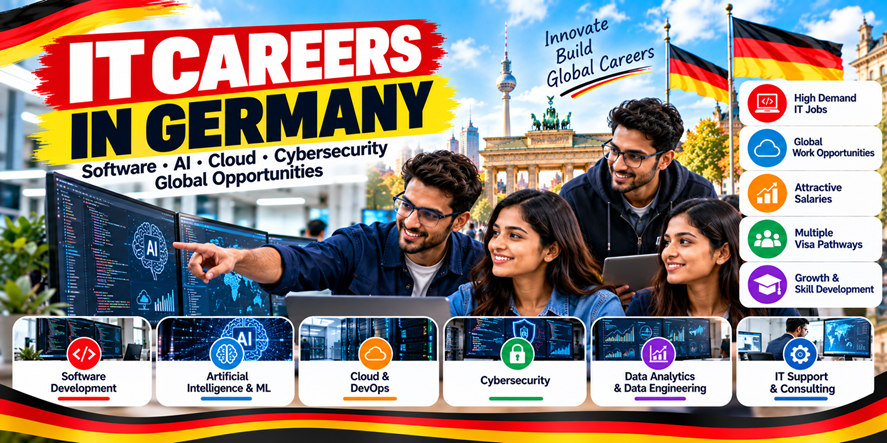
IT and digital technology
Software development, data, cybersecurity, cloud and digital systems.

Nursing and care occupations, subject to the relevant training and recognition requirements.

Warehousing, transport, inventory operations and supply chain activities.

Hotel operations, food service, guest relations and related occupations.
The right choice depends on your existing qualifications, interests, language level, and the availability of suitable opportunities.
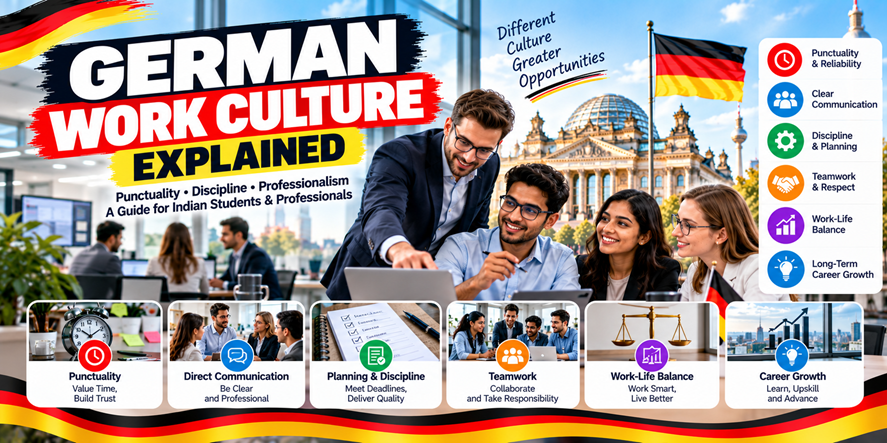
German workplace culture is often associated with punctuality, planning, clear communication, and accountability.
These expectations can help employees understand their responsibilities and work effectively within a team.
For Indian candidates moving to Germany, adapting to professional norms may be just as important as developing technical skills.
Some useful habits to practise before applying include:
Arriving on time and respecting deadlines
Communicating clearly and professionally
Following safety procedures
Taking responsibility for assigned tasks
Asking questions when instructions are unclear
Working collaboratively and respecting colleagues
Workplaces differ, of course, and not every employer follows the same culture. Nevertheless, preparing for these expectations can help candidates make a stronger transition.
Working or studying in another country can expose you to different technologies, systems, working methods, and professional expectations.
Depending on your programme and role, a German experience may help you develop:
Cross-cultural communication
Practical and technical expertise
Experience working in international teams
Independent problem-solving
Familiarity with European workplace practices
These skills may also be useful in future career opportunities outside Germany.
The benefit depends on the quality of your training, your actual work experience, and how effectively you apply what you learn.
Germany can offer opportunities to progress from initial training or entry-level employment towards more specialised roles.
For example, a person completing a technical vocational programme might later build experience in maintenance, production, quality assurance, or industrial automation.
Similarly, a graduate entering the technology sector may develop towards specialist, project management, or technical leadership roles.
Career progression is not automatic. It depends on performance, further qualifications, professional experience, language skills, and the opportunities available in the chosen field.
Germany also has residence pathways for some qualified workers after training or employment. The applicable conditions must be checked before making long-term plans.
Germany's vocational and academic institutions offer structured learning pathways, although the format, quality, cost, and entry requirements vary.
Before selecting a programme, investigate:
Whether the qualification is officially recognised
What practical experience the programme provides
Whether the training leads to a relevant occupational qualification
What language level is required
Whether the qualification supports your intended career
What costs and financial resources are involved
For vocational training, always verify the employer, training contract, occupation, and applicable visa conditions.
For higher education, check the institution, admission criteria, tuition fees, and recognition of your previous qualifications.
Moving to Germany is not only a professional decision. It is also a major personal transition.
Living abroad may help you develop independence, financial discipline, confidence, and the ability to navigate a new culture.
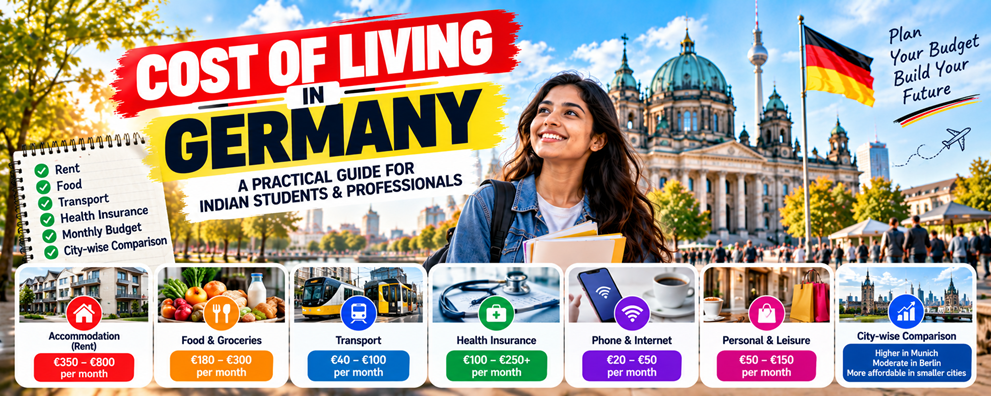
At the same time, you need to prepare for practical challenges, such as finding accommodation, managing expenses, learning German, adapting to the climate, and living away from family.
A realistic understanding of both the benefits and challenges is essential for making the right decision.
Use this quick guide to identify a starting point.
Your current profile | Pathway worth exploring |
|---|---|
Class 12 pass | Ausbildung or eligible higher education |
ITI or diploma holder | Relevant vocational opportunities or suitable skilled employment |
Bachelor's degree holder | Relevant master's programmes or qualified employment |
Experienced professional | Direct employment and applicable skilled-worker routes |
Interested in nursing or healthcare | Relevant training or professional recognition pathway |
These are starting points, not guarantees of eligibility. Your age, qualifications, language proficiency, finances, occupation, and visa conditions may affect your options.
Step 1: Choose your career direction
Decide whether you want to study, undertake Ausbildung, or pursue a job based on your current education and interests.
Step 2: Start learning German
Begin with the basics and work towards the level required for your selected programme or occupation. B1 is commonly required for vocational-training visa applicants when the relevant exception does not apply.
Step 3: Check your eligibility
Review qualification requirements, recognition rules, language criteria, financial needs, and official visa information.
Step 4: Find legitimate opportunities
Research employers, universities, or training providers. Verify every offer and understand all fees before making payments.
Step 5: Prepare your application
Organise your certificates, CV, language evidence, financial documents, and any other paperwork required for your specific pathway.
Frequently Asked Questions
1. Can Indian students go to Germany after Class 12?
Yes, there are possible pathways, including eligible higher education programmes and vocational training. The academic, language, financial, and visa requirements depend on the chosen route.
2. Is German mandatory to work in Germany?
Not for every position in the same way. Requirements vary by employer, occupation, and visa pathway. German proficiency is particularly important for many vocational-training programmes and customer-facing roles.
3. Can I earn money while studying or training in Germany?
Company-based Ausbildung generally provides a training allowance. University students may be allowed to undertake employment within the applicable rules, but students should not assume that part-time earnings will cover all living costs.
4. Is a job in Germany guaranteed after Ausbildung?
No. Completing training can improve your professional preparation, but employment depends on your qualification, performance, employer opportunities, and applicable immigration requirements.
5. Is Germany suitable for ITI and diploma holders?
It can be worth exploring, particularly for candidates with relevant technical skills. The right pathway depends on the qualification, occupation, recognition requirements, language ability, and available positions.
6. Is Germany completely free for Indian students?
No. Tuition policies vary by institution and state, and even where tuition is low or absent, students still need to budget for accommodation, food, insurance, transport, and other expenses.
Germany may offer a valuable combination of education, practical training, skilled employment, and professional development. But success starts with preparation, not simply with the decision to move abroad.
Understand your options, strengthen your skills, learn the language, verify official requirements, and choose a pathway that matches your goals.
Your career abroad should begin with a plan — not a promise.

Contact: +91 9403890820
Website: www.efos.in
Series: Career in Germany — Article 1 of 20 | EFOS.in