Find answers to common questions about studying, working, vocational
training, and building a career in Germany.
Why do people choose Germany for their careers?
Germany attracts international candidates through its diverse industries,
vocational training opportunities, professional work environment, and
emphasis on practical skills and career development.
Can Indian candidates explore career opportunities in Germany?
Yes. Indian candidates can explore suitable study, vocational training,
and employment opportunities depending on their qualifications, skills,
experience, language abilities, and applicable immigration requirements.
Is learning German important for working in Germany?
German language skills can improve communication, workplace integration,
and access to opportunities. The level required depends on the role,
employer, training programme, and applicable visa or professional rules.
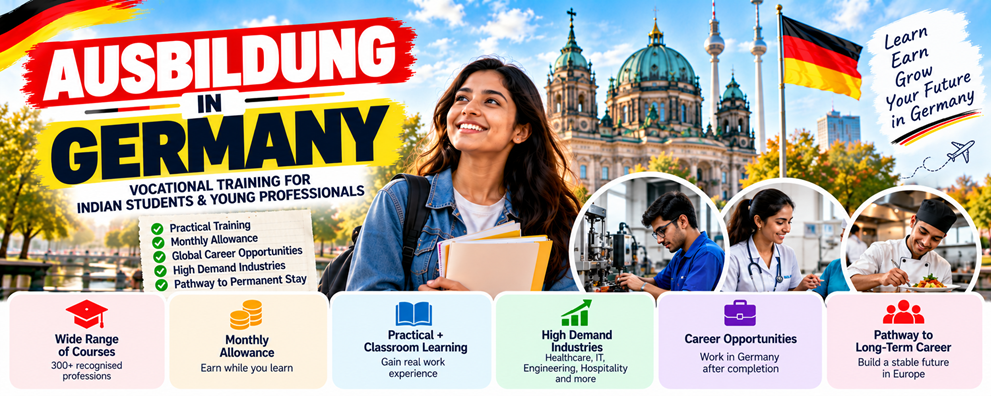
What is Ausbildung in Germany?
Ausbildung is Germany's vocational training system, which combines
practical workplace learning with structured theoretical instruction.
It helps learners develop occupation-specific skills for their chosen
profession.
What is the difference between studying and vocational training?
Academic study generally focuses on theoretical knowledge and specialised
education, while vocational training emphasises practical skills and
preparation for a specific occupation. The right option depends on your
interests, qualifications, and career goals.
Can freshers apply for jobs in Germany?
Opportunities depend on the occupation, employer expectations, relevant
qualifications, practical skills, and work authorisation. Freshers may
also explore suitable training programmes and entry-level roles.
Are professional qualifications from India accepted in Germany?
Recognition requirements vary by qualification and occupation. Some
professions require formal recognition or a professional licence, while
other roles may follow different assessment procedures. Candidates should
check the requirements for their specific profession.
How can I find genuine jobs or training opportunities in Germany?
Search through official employment portals, recognised company career
pages, vocational training platforms, and reputable recruitment channels.
Always verify the employer, job description, contract, and recruitment
process before making a commitment.
Do I need a visa to work or train in Germany?
Visa and residence requirements depend on your nationality, purpose of
travel, qualifications, and employment or training arrangement. Review
the applicable requirements through official German immigration sources
before making travel plans.
What should I know about German workplace culture?
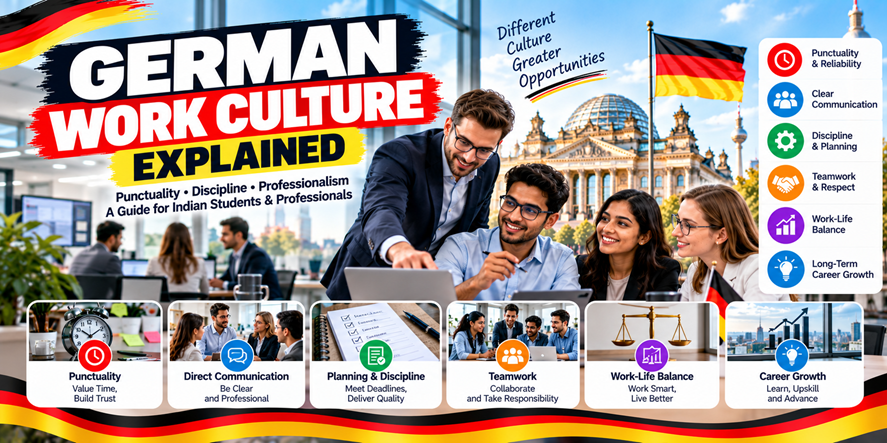
Professional communication, punctuality, reliability, teamwork, safety
awareness, and respect for workplace procedures are valued in many German
organisations. Expectations can vary by employer, industry, and role.
How should I prepare before moving to Germany?
Research your destination, understand your visa conditions, organise
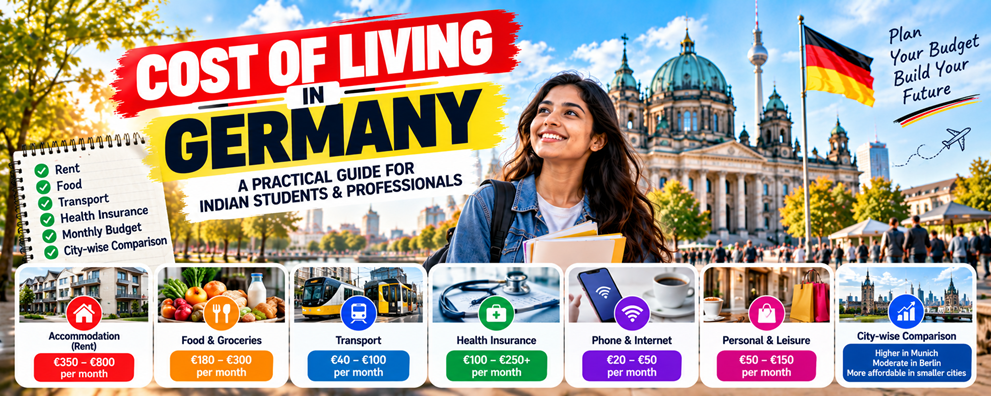
relevant documents, plan accommodation and finances, improve your
language skills, and learn about local customs and workplace expectations.
How can I avoid fraudulent job offers or recruitment scams?
Verify employers and recruitment agencies independently, read contracts
carefully, check official contact details, and be cautious of guaranteed
jobs or visas. Never rely solely on verbal promises or unverified
documents when making career or financial decisions.
Can EFOS help me explore career pathways in Germany?
EFOS – Education Future One Stop can help you explore education and
career-related pathways, understand available options, and identify
questions to clarify before proceeding. Always verify programme details,
employer commitments, and immigration requirements before enrolling or
making payments.
Contact EFOS:
Visit EFOS.in
or call +91 9403890820.