EFOS Career in Germany Series | Article 6 of 20
What makes a successful society? Is it only doctors, engineers, and business leaders—or does it also depend on electricians, mechanics, nurses, warehouse workers, technicians, cooks, and thousands of other skilled professionals?
Germany offers an interesting perspective on this question. Its vocational education system, apprenticeship pathways, and industrial workforce demonstrate how practical skills and occupational training can contribute to the economy.
For Indian students and young professionals exploring a career in Germany, understanding this approach can be valuable. It encourages people to look beyond job titles and salaries and recognise the importance of developing skills, performing work responsibly, and building a career through continuous learning.
In this article, EFOS.in explores the value of work in Germany, the role of vocational skills, and the lessons Indian youth can consider when planning their careers.
Imagine a hospital without nurses, a factory without technicians, a hotel without service staff, or a logistics centre without warehouse professionals.
Even highly qualified professionals depend on the work of many other people to deliver results.
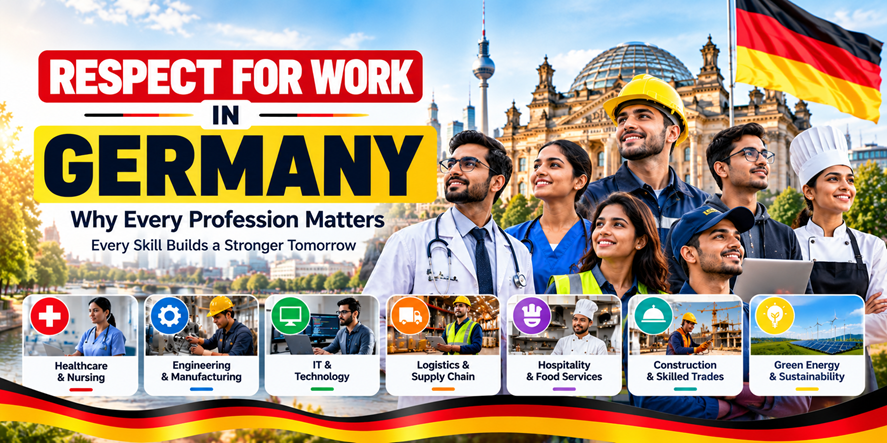
Germany's economy includes academic professionals, skilled tradespeople, vocationally trained workers, technicians, and service professionals. Each occupation has different responsibilities, qualifications, and working conditions.
Examples include:
Doctors and nurses who provide healthcare.
Engineers and technicians who design, maintain, and improve systems.
Electricians and mechanics who install, repair, and maintain equipment.
Logistics professionals who help goods move through supply chains.
Hospitality workers who support hotels, restaurants, and tourism.
IT professionals who develop and maintain digital systems.
Construction workers who help build and maintain infrastructure.
The lesson is simple: the value of work should not be judged only by the prestige of a job title. Skills, responsibility, service, and the quality of the work matter too.
One of the most important features of Germany's education system is its structured vocational education and training pathway.
The dual vocational training system, known as duale Ausbildung, generally combines two forms of learning:
Practical training at a company.
Theoretical instruction at a vocational school.
Trainees learn the knowledge and practical abilities required for a particular occupation. Company-based programmes generally provide a training allowance under the training contract.
For example, a young person training as a mechatronics technician learns about mechanical systems, electrical components, industrial equipment, and troubleshooting. This combination of theory and practical experience prepares the trainee for the responsibilities of the occupation.
Vocational training is not necessarily a second choice for someone who cannot attend university. It is a distinct educational pathway designed to develop occupational competence.
For Indian students, this offers an important perspective: a degree and a vocational qualification serve different purposes, and both can support meaningful careers.
Modern industries depend on people who can apply knowledge to real-world problems.
Consider a manufacturing facility. Engineers may design the production system, but technicians, machine operators, maintenance professionals, and quality specialists help keep the system operating safely and effectively.
Similarly, a hotel depends on managers, chefs, housekeeping professionals, maintenance staff, and customer-service employees.
Practical skills become especially valuable when they help solve real problems, improve quality, maintain safety, or deliver a reliable service.
Some examples include:
Profession | Contribution |
|---|---|
Mechatronics technician | Maintains and troubleshoots mechanical and electrical systems |
Electrician | Installs and maintains electrical systems safely |
Nurse | Provides patient care and supports healthcare delivery |
Logistics specialist | Coordinates storage, inventory, and movement of goods |
Chef | Prepares food and maintains hygiene and quality standards |
IT specialist | Supports digital infrastructure and technology systems |
Quality technician | Helps maintain product and process standards |
The importance of these occupations is not that every job has the same responsibilities or pay. Rather, each occupation contributes through its own skills and professional standards.
Professional dignity should not depend on whether someone works in an office, a factory, a hospital, a hotel, or a construction site.
A person performing a technical task may have years of training and experience. A service professional may need excellent communication, patience, problem-solving ability, and knowledge of safety procedures.
Respecting work means recognising the effort, competence, and responsibility involved in performing it.
This can include:
Treating colleagues respectfully regardless of their designation.
Recognising technical and vocational expertise.
Following safety procedures and workplace rules.
Valuing honest work and professional responsibility.
Providing fair treatment and appropriate working conditions.
Encouraging people to improve their skills throughout their careers.
Germany is not free from workplace inequality, status differences, or unfair treatment. Nevertheless, its formal vocational training structures illustrate how occupational skills can be developed and recognised.
In India, students and families sometimes focus heavily on a narrow range of career options. Engineering, medicine, management, and government employment may receive considerable attention, while vocational and technical careers can be overlooked.
Every family has its own priorities, and academic education remains valuable. However, young people should also have the opportunity to explore career pathways that match their interests and abilities.
Here are five lessons worth considering.
Lesson 1: Choose a career based on aptitude, not social pressure.
A student who enjoys repairing machines may thrive in a technical occupation. Another who enjoys research may prefer an academic route.
Lesson 2: Develop skills that employers can use.
Practical competence, communication, reliability, and problem-solving can strengthen your professional profile.
Lesson 3: Understand the value of vocational education.
An appropriate vocational qualification can provide a structured route into a specific occupation.
Lesson 4: Treat every profession with dignity.
A person's occupation does not determine their personal worth.
Lesson 5: Keep learning.
Technology, workplace requirements, and industry practices change. Continuous learning helps professionals adapt.
Yes, some occupations allow people to develop successful careers through vocational qualifications, practical experience, and further professional training rather than a conventional university degree.
Germany's vocational training system provides structured pathways into many technical, commercial, and service occupations.
Possible examples include:
Industrial mechanics and mechatronics technicians.
Electronics technicians.
Automotive mechatronics professionals.
Warehouse logistics specialists.
Hotel and restaurant professionals.
Selected skilled trades.
However, entry requirements differ by occupation. Some professions require specific formal qualifications, while regulated occupations may require recognition or a licence.
Career advancement also varies. Additional qualifications, experience, performance, and employer requirements influence whether a person progresses into specialist, supervisory, or management roles.
The right question is not simply whether a degree is necessary. It is whether your chosen qualification prepares you for the career you want.
Respect for work also means taking professional responsibilities seriously.
In many German workplaces, punctuality, clear communication, planning, and accountability are important expectations. The exact culture varies by organisation, occupation, and team.
Indian candidates preparing for an international career can practise these habits before moving abroad.
Punctuality
Arrive on time, respect schedules, and communicate promptly if delays occur.
Safety and responsibility
Follow procedures, use equipment correctly, and report problems rather than ignoring them.
Clear communication
Ask questions when instructions are unclear, explain problems accurately, and listen to colleagues.
Quality and accountability
Complete assigned tasks carefully, check your work, and take responsibility for mistakes.
These habits are valuable in international workplaces generally, not only in Germany.
No. Respect for a profession and its remuneration are separate issues.
Different occupations require different levels of training, responsibility, experience, and specialisation. As a result, salaries and working conditions vary.
A fair discussion of work should consider several factors:
The skills and qualifications required.
The responsibility and complexity of the role.
The working environment and safety risks.
Working hours and employment conditions.
The applicable pay arrangements and labour protections.
Opportunities for further training and progression.
Candidates should research realistic salaries and employment conditions rather than assuming that every occupation pays equally or that all workers receive high salaries.
Respecting a person means treating them with dignity. It does not mean ignoring differences in qualifications, duties, or remuneration.
If you are an Indian student or professional exploring Germany, use the following process to make a more informed decision.
Identify your strengths. Consider whether you enjoy practical work, technical problem-solving, academic research, customer interaction, or management.
Explore suitable occupations. Research the daily responsibilities, working environment, and career progression of each role.
Check qualification requirements. Find out whether you need a degree, vocational training, professional recognition, or a licence.
Develop relevant skills. Improve your technical abilities, communication, workplace readiness, and German-language proficiency where required.
Verify genuine opportunities. Use official sources and legitimate employers to research training positions and jobs.
Frequently asked questions
1. Is vocational training respected in Germany?
Germany has a well-established vocational education system that prepares learners for specific occupations. The recognition and career value of a qualification depend on the occupation, training programme, employer, and individual circumstances.
2. Is a university degree always better than vocational training?
No. The two pathways have different purposes. Some careers require an academic degree, while others are well suited to vocational qualifications and practical experience.
3. Can Indian students apply for Ausbildung in Germany?
Eligible Indian applicants can explore Ausbildung positions, provided they meet the relevant employer, training, language, financial, and visa requirements.
4. Does every skilled occupation offer high salaries?
No. Pay varies by occupation, qualification, employer, region, experience, and working conditions. Research actual salary information for your target role.
5. What is the biggest lesson Indian youth can learn from Germany's vocational system?
One important lesson is to recognise vocational training as a legitimate educational pathway and choose a career based on skills, aptitude, and realistic opportunities.
A strong career is not defined only by a prestigious title or an impressive degree. It is also shaped by practical competence, dedication, professional responsibility, and a willingness to keep learning.
Germany's vocational education system provides an example of how structured occupational training can prepare people for specific professions. For Indian youth, it is an opportunity to look more broadly at career choices and recognise the potential of both academic and vocational pathways.
Whether you choose engineering, healthcare, IT, hospitality, logistics, or a skilled trade, start by understanding the profession and developing the abilities it requires.
Every career begins with learning. Every skill grows through practice. And every honest profession deserves dignity and respect.
EFOS – Education Future One Stop
Explore education, vocational training, and career pathways that match your interests, qualifications, and ambitions.
Contact: +91 9403890820
Website: www.efos.in
Series: Career in Germany — Article 6 of 20 | EFOS.in
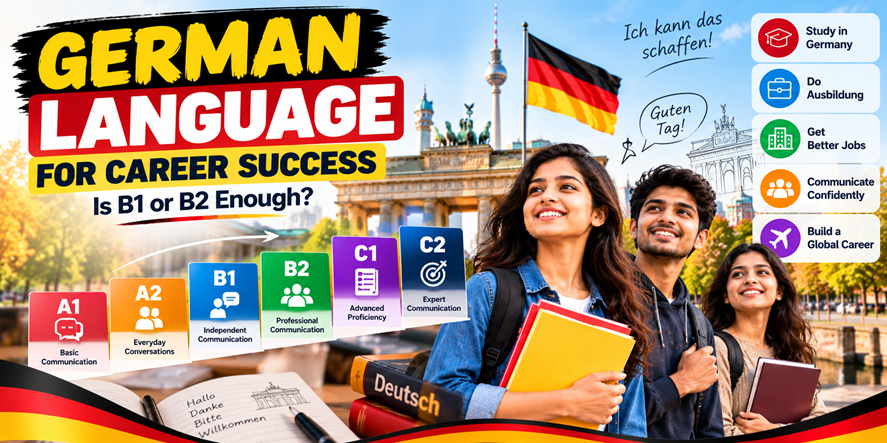
Next article: Article 7 — German Language for Career Success: Is B1 or B2 Enough?