EFOS Career in Germany Series • Career Guidance • 2026
Germany is known for its engineering, automotive, machinery, industrial automation, and advanced manufacturing sectors. For Indian students, diploma holders, engineers, and skilled technicians, these industries offer several career pathways worth exploring.
But building a career in Germany requires more than a technical qualification. Employers may look for practical experience, specialised skills, problem-solving ability, workplace communication, and—in many roles—German-language proficiency.
In this guide: explore engineering career options, manufacturing jobs, skills employers may value, Ausbildung opportunities, qualification recognition, language requirements, and practical steps for applying from India.
Germany has a long-established industrial base covering machinery, automotive manufacturing, electrical engineering, industrial equipment, and advanced production technologies.
Its industries are also adapting to digitalisation, automation, electrification, and the energy transition. These changes create opportunities for professionals with the right technical background, although demand differs by occupation, region, and experience level.
Germany's official skilled-worker portal identifies areas such as automation technology, automotive engineering, renewable energy, environmental protection, and artificial intelligence among engineering career fields to explore.
For Indian applicants, the opportunity is not limited to people with bachelor's or master's degrees. Depending on the role and entry route, qualified technicians, vocationally trained professionals, and experienced manufacturing workers may also find relevant pathways.

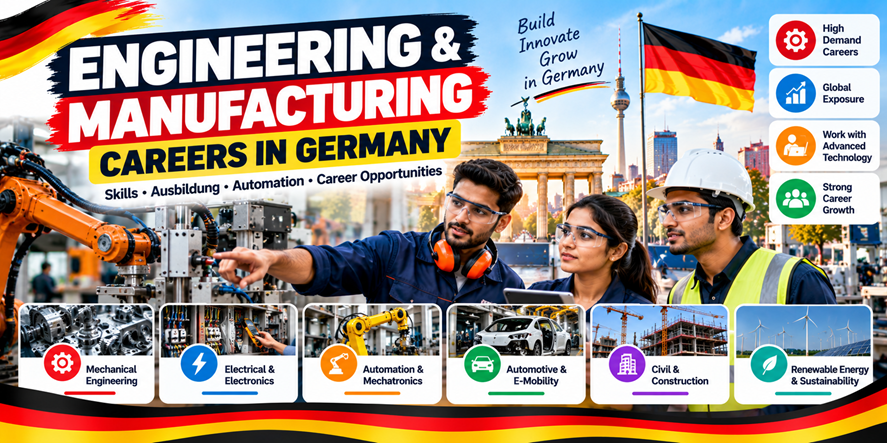
Mechanical Engineering
Potential roles include mechanical design, production engineering, machine development, maintenance engineering, and manufacturing process improvement.
Useful skills: CAD software, engineering drawings, materials, manufacturing processes, and problem-solving.

Electrical and Electronics Engineering
Opportunities may involve electrical systems, industrial equipment, electronics, testing, power systems, and control technologies.
Useful skills: circuit fundamentals, electrical safety, instrumentation, troubleshooting, and technical documentation.

Automation and Mechatronics
This field combines mechanical systems, electronics, sensors, control systems, and software to operate modern machinery.
Useful skills: PLC fundamentals, sensors, robotics, automation logic, and system troubleshooting.

Automotive and Electric Mobility
Career areas include vehicle systems, production, quality, testing, electric mobility, and manufacturing engineering.
Useful skills: automotive systems, quality tools, electrical fundamentals, testing procedures, and data analysis.

Civil and Construction Engineering
Potential areas include structural design, site engineering, construction planning, infrastructure, and building services.
Useful skills: engineering drawings, project coordination, relevant design software, and construction standards.

Renewable Energy and Environmental Technology
Work may involve energy systems, electrical infrastructure, environmental engineering, and sustainable industrial processes.
Useful skills: energy fundamentals, electrical systems, data analysis, and environmental standards.
These are examples of career areas, not a list of guaranteed vacancies. The actual requirements depend on the employer and the specific position.
You do not necessarily need an engineering degree for every technical career in Germany. Some roles are based on vocational training, technical qualifications, and practical experience.
Potential occupations to research include:
Occupation | Typical work |
|---|---|
Industrial mechanic | Assembly, maintenance, and repair of industrial equipment |
Mechatronics technician | Working with mechanical, electrical, and control systems |
Electronics technician | Installing, testing, and maintaining electrical or electronic systems |
CNC machining professional | Operating or programming machine tools |
Toolmaker | Producing and maintaining specialised tools and components |
Production technician | Supporting manufacturing processes and equipment |
Quality technician | Inspecting products, measuring components, and recording results |
Maintenance technician | Diagnosing equipment problems and carrying out maintenance |
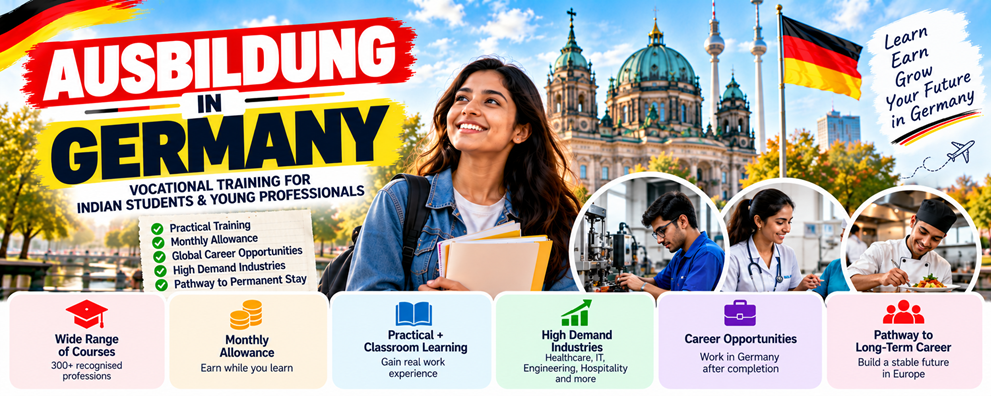
Germany's official vocational training guidance highlights technical routes in the electronic and metal industries, including industrial mechanics, electronics, mechatronics, automation, and metalworking. Many dual vocational programmes combine workplace training with vocational-school education and typically take two to four years, depending on the occupation.
It may be worth considering if you want practical, occupation-focused training in Germany. Your previous diploma or work experience could be useful, but acceptance depends on the training employer and programme.
Before applying, check:
Whether your educational background meets the employer's requirements.
Which German-language level is expected.
Whether the training is company-based and includes an allowance.
What the allowance covers after living expenses.
Which visa conditions apply to your circumstances.
A training contract does not automatically guarantee a visa or a job after graduation.
Technical qualifications are important, but employers may also evaluate how well candidates apply their knowledge in real situations.
Technical fundamentals
Understand engineering drawings, measurements, tolerances, materials, machine components, and relevant technical principles.
Hands-on problem-solving
Practise diagnosing faults, identifying root causes, following maintenance procedures, and working safely with equipment.
Digital and automation skills
Depending on your field, learn CAD, PLC basics, industrial sensors, robotics, manufacturing software, or data-analysis tools.
Quality and safety
Understand inspection, measurement, documentation, workplace safety, and continuous improvement.
Communication and teamwork
Explain technical problems clearly, follow instructions, coordinate with colleagues, and maintain accurate records.
You do not need to master every skill at once. Choose the skills most relevant to the role you want and develop evidence of your ability through projects, practical exercises, internships, or previous work.
German-language expectations vary across engineering and manufacturing employers.
Some international companies and specialist teams operate partly in English, particularly in technical or research environments. However, German can be important for safety instructions, team communication, production-floor coordination, technical documentation, and everyday life.
A useful approach is to:
Start learning German as early as possible.
Check the language requirements in actual job advertisements.
Practise technical vocabulary related to your occupation.
Prepare to explain your projects and work experience in both English and German where relevant.
Confirm whether your intended vocational programme requires a specific German-language certificate.
There is no single German-language level that applies to every engineering job. The required level depends on the employer, job responsibilities, training institution, and immigration route.
Your qualification may be relevant to German employment, but the process depends on the occupation and immigration route.
For many non-regulated engineering jobs, a formal professional licence may not be required to perform the work. Nevertheless, qualification comparability or recognition can be important for some immigration pathways and employers.
The professional title Ingenieur is regulated in certain circumstances under German state law. Permission to use that title may require recognition or authorisation according to the relevant state's rules.
Identify the exact job title. A mechanical design engineer, maintenance technician, and licensed professional do not necessarily follow the same rules.
Check the qualification requirements. Determine whether the employer asks for a degree, vocational qualification, or specified experience.
Review recognition or comparability rules. Use official German recognition resources.
Prepare supporting documents. These may include certificates, transcripts, course details, employment references, and certified translations if requested.
Confirm visa eligibility separately. Professional recognition and immigration permission are related but distinct matters
The right route depends on your background and whether you already have a job offer.
Your background | Route to investigate |
|---|---|
Engineering degree and qualifying job offer | Skilled worker visa or EU Blue Card, if eligible |
Technical vocational qualification and suitable job offer | Relevant skilled-worker or experienced-professional route |
Diploma holder seeking hands-on vocational training | Ausbildung opportunities and vocational training visa |
Experienced professional without a current job offer | Opportunity Card, if eligible |
Engineering graduate considering further education | Relevant German university programmes |
These are starting points for research, not eligibility decisions. Each route has its own qualification, employment, financial, and immigration conditions.
A focused search is more useful than sending the same application to every company.
Choose a target role
Decide whether you are applying for mechanical engineering, automation, maintenance, quality control, production, or another defined occupation.
Match your skills to the job description
Identify required software, machinery, technical standards, experience, and language skills. Apply where your profile is a reasonable match.
Prepare a clear CV
List qualifications, employment history, technical skills, projects, responsibilities, and measurable achievements. Use accurate job titles and dates.
Build practical evidence
Highlight internships, technical projects, machine experience, CAD drawings, automation work, quality tools, or maintenance tasks that you have genuinely completed.
Use reliable job sources
Search official German job resources, company career pages, and reputable recruitment platforms. Verify the employer before sharing sensitive documents or paying any fee.
Check the immigration route
Confirm the visa conditions before making travel plans or accepting an offer.
Use this as a flexible preparation schedule. It does not guarantee employment within 90 days.
Choose your direction
Select one or two target occupations.
Review job advertisements and required qualifications.
Identify gaps in technical skills and language.
Check recognition requirements if relevant.
Strengthen your profile
Update your CV for the selected occupation.
Practise technical interview questions.
Document relevant projects and practical skills.
Begin or continue German-language preparation.
Apply and review
Submit tailored applications to suitable employers.
Track applications and interview feedback.
Improve weak areas based on responses.
Verify any offer and check the appropriate visa route.
Applying for roles that require qualifications or experience you do not have.
Listing software or machinery skills you cannot demonstrate.
Assuming every engineering job is available in English.
Ignoring qualification recognition or professional-title rules.
Paying for an alleged guaranteed job or visa.
Accepting an offer without checking the salary, work conditions, location, and contract.
Treating a general statement about labour demand as proof that a specific vacancy exists.
Germany has opportunities for qualified engineers and technical professionals, but the market is not identical across every region or occupation. Preparation should be based on actual job requirements and your individual profile.
Germany's engineering and manufacturing sectors are worth exploring if you have a technical background or want to develop practical skills for an industrial career.
Start by choosing a clear occupation, understanding its requirements, improving the skills relevant to that role, and preparing a credible application. If you are a diploma holder or school-leaver, investigate vocational training alongside direct employment options. If you already have an engineering qualification, check recognition and visa requirements before applying.
A strong international career plan combines technical competence, practical experience, communication skills, and verified information.
EFOS – Education Future One Stop helps students and aspiring professionals explore education pathways, vocational training, skill development, and career opportunities.
For career guidance and information about suitable pathways:
Phone: +91 9403890820
Website: https://efos.in/
Disclaimer: This article is for general career-awareness purposes and is not legal or immigration advice. Job availability, qualification requirements, recognition rules, and visa conditions vary. Verify current details with official German authorities and employers before making decisions or payments.
Skills • Ausbildung • Automation • Career Opportunities