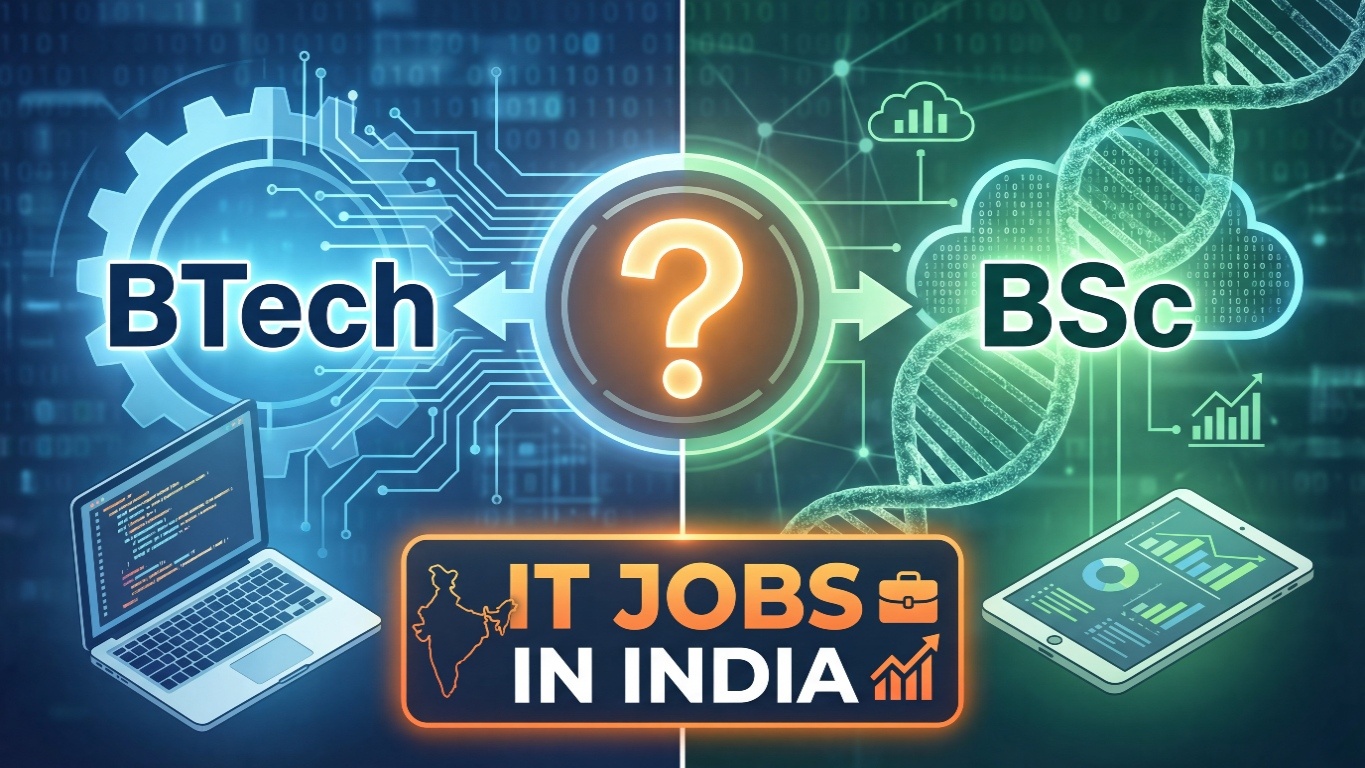
BTech and BSc both open doors to IT jobs in India, but BTech's engineering rigor gives it a clear edge for developer and tech roles amid 2026's AI and software boom. For PCM students in Greater Noida eyeing IT careers, this medium-length guide compares them across key factors to help you decide.
BTech (Bachelor of Technology), typically in CSE or IT, spans 4 years with a practical, engineering-focused curriculum blending hardware, software, and systems design. It demands JEE-level math and problem-solving for roles like full-stack development.
BSc (Bachelor of Science), often in CS or IT, lasts 3 years and emphasizes theory, programming basics, and research. It's accessible post-12th science, suiting quick entry but needing upskilling for competitive IT jobs.
| Aspect | BTech (CSE/IT) | BSc (CS/IT) |
|---|---|---|
| Duration | 4 years | 3 years |
| Focus | Engineering, applications | Theory, fundamentals |
| Eligibility | 10+2 PCM (60%+), JEE | 10+2 Science (50%+) |
| Fees (Total) | ₹4-15 lakhs | ₹1-4 lakhs |
BTech builds job-ready engineers; BSc offers foundational knowledge.
BTech entry via JEE Main/Advanced or UPCET; top Greater Noida spots: GL Bajaj, Galgotias, or IIT Kanpur affiliates. High competition, but state quotas help locals.
BSc uses 12th merit or CUET; easier access at Amity, Sharda, or CCSU Meerut. Lower cutoffs make it student-friendly.
BTech covers:
Data structures, OS, networks, ML
Projects, internships, labs
Preps for coding interviews at TCS, Infosys.
BSc includes:
Programming (Python, Java), databases
Basic web dev, stats
Great start, but less depth in algorithms.
BTech hones scalable IT skills; BSc focuses on concepts.
BTech grads land:
Software engineer, DevOps, data analyst
Firms: Google, Accenture, Wipro (90%+ placement)
High demand in Noida's IT parks.
BSc paths:
Junior developer, IT support, tester
Startups, BPOs; often needs MCA/certifications
Narrower for core IT.
2026 trend: 2M+ IT jobs favor BTech for AI/cloud roles.
BTech CSE/IT: ₹5-12 LPA (IITs: ₹20+ LPA); 3-year: ₹15-30 LPA.
BSc CS/IT: ₹3-6 LPA; grows to ₹8-12 LPA with experience/MSc.
| Level | BTech Avg | BSc Avg |
|---|---|---|
| Fresher | ₹5-12 LPA | ₹3-6 LPA |
| Mid-Level | ₹15-30 LPA | ₹8-15 LPA |
BTech yields faster ROI in IT hubs.
BTech Pros: Prestige, higher pay, direct IT placements. Cons: Tougher, costlier.
BSc Pros: Shorter, affordable, flexible. Cons: Less competitive for top IT jobs.
Choose BTech if: Strong math, aim for developer/architect roles.
Go BSc if: Quick degree, then MCA/bootcamps for IT entry.