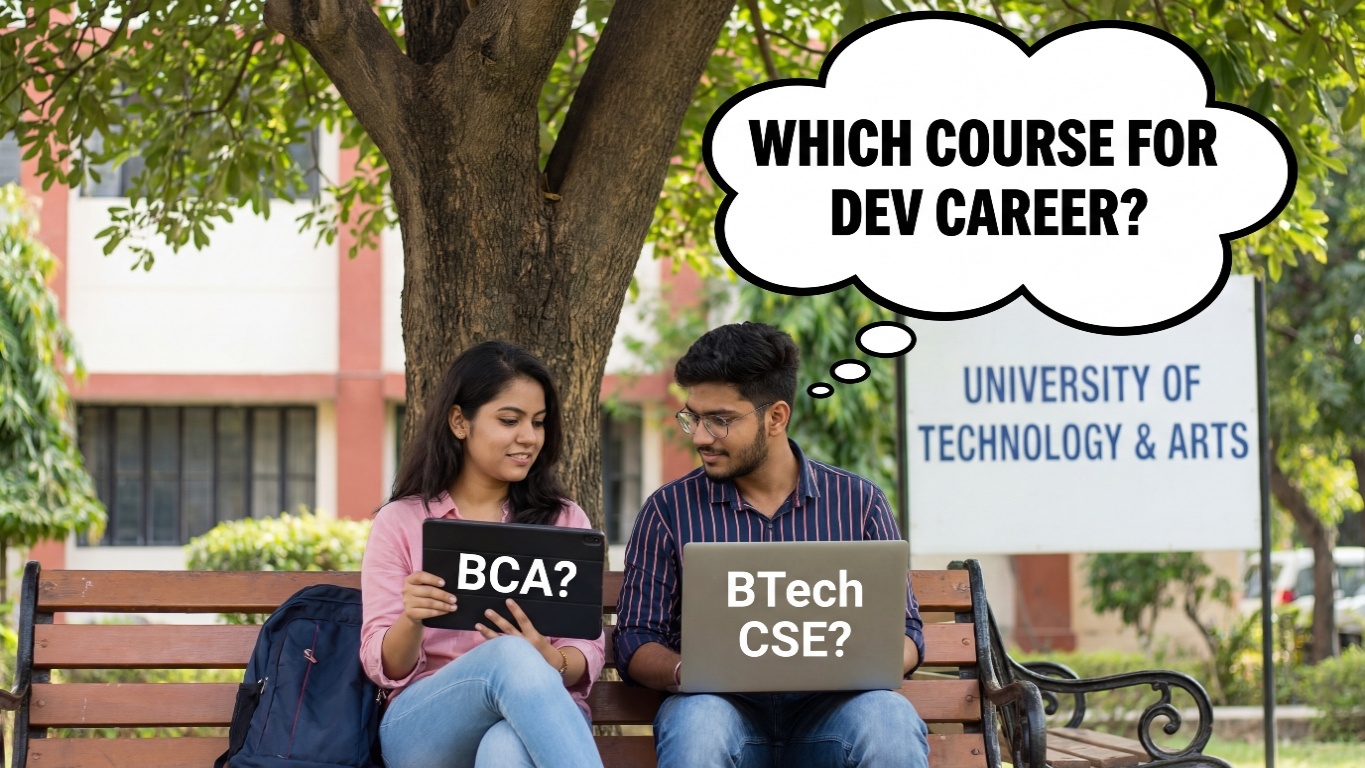
BCA (Bachelor of Computer Applications) emphasizes practical software skills like programming, web development, and databases over three years. It's application-oriented, ideal for quick entry into IT roles without heavy engineering theory.
BTech CSE (Bachelor of Technology in Computer Science Engineering), a four-year engineering degree, dives into core concepts like algorithms, hardware, networks, and advanced math. It builds a rigorous foundation for complex tech roles.
| Aspect | BCA | BTech CSE |
|---|---|---|
| Duration | 3 years | 4 years |
| Focus | Applications, software dev | Engineering, systems, theory |
| Eligibility | 10+2 any stream (50%+) | 10+2 PCM (60%+), JEE/MHT-CET |
| Curriculum Depth | Practical tools (Java, SQL) | Algorithms, OS, AI, networks |
BCA suits non-science backgrounds; BTech CSE demands math and physics aptitude.
BCA admissions rely on 12th marks or university tests like IPU CET, with easier entry. Fees range ₹1-3 lakhs total. Popular options: Christ University, Symbiosis, Amity Noida.
BTech CSE requires JEE Main (for NITs/IITs) or state exams like UPCET. Fees: ₹4-10 lakhs (govt/private). Standouts: IIT Delhi, NIT Allahabad, AKTU affiliates in Greater Noida like GL Bajaj.
In Uttar Pradesh, state quotas favor locals for both, but BTech spots fill fast via JEE counseling.
BCA covers:
Programming (C++, Python)
Web tech (HTML, PHP)
Databases, cloud basics
Hands-on projects prepare you for app development.
BTech CSE includes:
Data structures, OS
Computer architecture, ML
Electives like cybersecurity
Labs and internships build engineering prowess.
Developers thrive on BCA's speed to code; BTech's theory excels in scalable systems.
BCA grads target:
Software developer
Web/app tester
IT support, UI/UX junior
Industries: Startups, services (TCS, Wipro).
BTech CSE opens:
Full-stack developer
Data engineer, DevOps
AI specialist
Core tech: Google, Microsoft, Infosys R&D.
BTech edges for developer roles needing depth, like backend or AI dev.
Fresh BCA: ₹3-6 LPA; mid-level: ₹8-15 LPA with MCA/certifications.
Fresh BTech CSE: ₹5-12 LPA (IITs: ₹20+ LPA); mid-level: ₹15-30 LPA.
India's 2026 IT hiring favors BTech for high-end dev (1.5M jobs), but BCA holders upskill via bootcamps to compete.
| Experience Level | BCA Avg Salary | BTech CSE Avg Salary |
|---|---|---|
| Fresher | ₹3-6 LPA | ₹5-12 LPA |
| 3-5 Years | ₹8-15 LPA | ₹15-30 LPA |
BCA Pros: Shorter, affordable, quick job entry. Cons: Less prestige, needs MCA for growth.
BTech CSE Pros: Deeper skills, better pay, research/PhD path. Cons: Intense, costlier.
ROI: BCA recovers in 1-2 years; BTech in 2-3, with higher peaks.
Pick BCA if:
From commerce/arts post-12th
Want fast-track to development jobs
Budget/time-constrained
Choose BTech CSE if:
Strong in math/physics
Aim for senior dev/architect roles
Eyeing PSUs or global tech
Quick Quiz:
Love coding apps? BCA.
Build AI systems? BTech.
3+ yes to tech depth? Go BTech.
Hybrid: BCA + certifications (AWS, Full Stack) rivals BTech.
BCA alum: Sachin Bansal (Flipkart co-founder, BCA roots via skills).
BTech: Shradin Bichoo (IIT grad, dev at top firms).
2026 trends: AI/dev demand surges in Noida hubs; upskill in cloud/ML regardless.
For aspiring developers, BTech CSE wins for technical edge and salaries, but BCA fits quicker, flexible starts—especially with MCA follow-up. Assess your 12th stream, aptitude, and goals; intern early via LinkedIn.