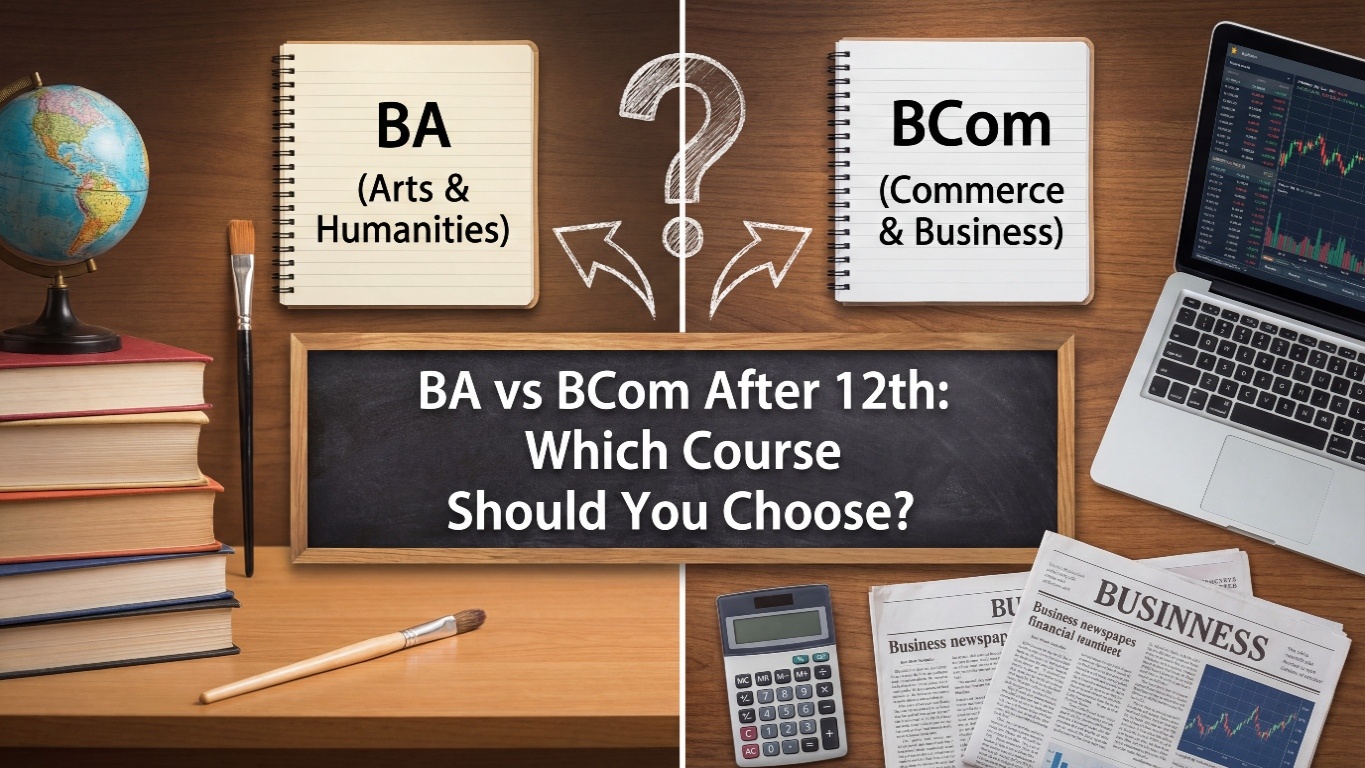
BA (Bachelor of Arts) spans humanities and social sciences, fostering broad skills in communication, critical analysis, and culture. It's a three-year degree flexible across streams like history, psychology, or English, ideal for diverse careers.
BCom (Bachelor of Commerce) focuses on business, accounting, economics, and finance, building analytical prowess for commerce roles. Also three years, it suits number-crunchers aiming for corporate or entrepreneurial paths.
| Aspect | BA | BCom |
|---|---|---|
| Focus | Humanities, social sciences | Commerce, finance, accounting |
| Eligibility | 10+2 any stream (50%+) | 10+2 commerce/math (50-60%+) |
| Curriculum | Literature, sociology, languages | Accounting, taxation, economics |
| Fees (Total) | ₹50k-2 lakhs (govt/private) | ₹1-4 lakhs |
BA emphasizes breadth; BCom depth in business fundamentals.
BA admissions use 12th marks or CUET, with easy entry for arts/commerce students. Fees stay low in DU affiliates or state universities. Greater Noida options: Amity, Sharda University; classics like Allahabad University.
BCom requires commerce background, via CUET or merit. Higher fees reflect practical training. Standouts: SRCC Delhi, Loyola Chennai, local like CCSU Meerut or AKTU-linked colleges.
UP students benefit from state quotas; apply via UPTAC counseling for seats.
BA subjects include:
History, political science, economics
Electives in journalism, psychology
Skills: Research, writing, public speaking
BCom covers:
Financial accounting, business law
Costing, auditing, taxation
Skills: Data analysis, budgeting, compliance
BA hones soft skills for advisory roles; BCom equips for financial operations.
BA paths:
Content writer, teacher, civil services (UPSC)
HR, media, NGOs
Sectors: Education, government, creative industries
BCom avenues:
Accountant, banker, tax consultant
Finance analyst, auditor
Fields: Banking, corporate finance, startups
Both yield jobs, but BCom aligns faster with India's finance boom.
Entry-level BA: ₹2.5-5 LPA in teaching/journalism. Mid-career (with MA/UPSC): ₹6-12 LPA.
BCom starters: ₹3-6 LPA in accounting/banking. With CA/MBA: ₹10-20+ LPA.
| Level | BA Avg Salary | BCom Avg Salary |
|---|---|---|
| Fresher | ₹2.5-5 LPA | ₹3-6 LPA |
| Mid-Level | ₹4.5-10 LPA | ₹6-15 LPA |
| Senior | ₹8-15 LPA | ₹12-25 LPA |
BCom offers quicker ROI amid rising fintech demand.
BA Pros: Versatile, affordable, creative freedom. Cons: Lower initial pay, needs further studies.
BCom Pros: Job-ready skills, high demand, CA/CS pathway. Cons: Narrower scope without certifications.
Future-proofing: BA + digital skills for content economy; BCom + analytics for finance 4.0.
Interests: Love reading/debating? BA. Excel at math/finance? BCom.
Goals: UPSC/government? BA. Corporate/entrepreneurship? BCom.
Background: Arts post-12th favors BA; commerce eases BCom.
Market Trends: India's services sector needs BA communicators; BFSI craves BCom pros.
Hybrid: BA Economics bridges both for policy/finance roles.
Quick Quiz:
Enjoy essays/history? +1 BA.
Balance sheets appeal? +1 BCom.
Majority BA? Go arts.
BA icons: Amartya Sen (Nobel economist), Barkha Dutt (journalist).
BCom stars: Kumar Mangalam Birla (Aditya Birla Group), Deepak Parekh (HDFC).
2026 outlook: Employability woes for plain BA/BCom—upskill via Coursera (data analytics, soft skills). Noida hubs favor commerce grads.
For Greater Noida students, BCom edges for immediate jobs and salaries in booming finance, but BA shines for passion-driven, versatile careers. Pursue internships, certifications early—CUET prep starts now!