
EFOS Career in Germany Series | Article 2 of 20
Can you build a career in Germany through practical training instead of following a traditional university route?
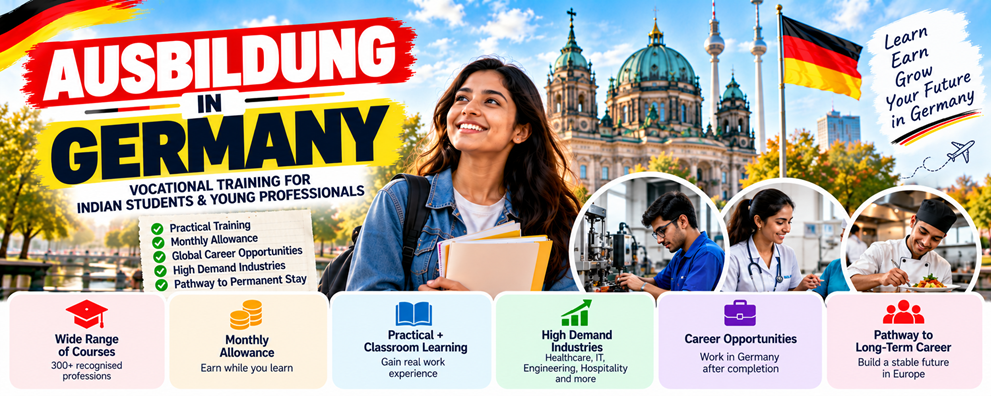
For Indian students and young professionals, the German Ausbildung system is one option worth exploring. It combines practical workplace experience with structured vocational education, helping trainees develop the skills needed for a specific occupation.
Unlike a conventional full-time academic programme, company-based Ausbildung generally involves learning at a workplace while attending a vocational school. Trainees typically receive a monthly training allowance under their training contract.
However, Ausbildung is not a shortcut to guaranteed employment or a visa. It requires preparation, suitable qualifications, German-language proficiency, and acceptance into an appropriate training programme.
In this article, EFOS.in explains how Ausbildung works, who can apply, what it may cost, and how Indian candidates can begin their journey.
Ausbildung is the German term commonly used for vocational training. It prepares learners for specific professions through a structured combination of occupational knowledge and practical skills.
Germany's dual vocational training system, known as duale Ausbildung, generally combines two learning environments:
Company: Practical training, workplace experience, and occupational tasks.
Vocational school (Berufsschule): Theoretical knowledge, technical subjects, and general vocational education.
For example, someone training in an automotive occupation may learn about vehicle systems, workshop procedures, diagnostic tools, and safety practices at the company while studying the relevant technical subjects at vocational school.
This approach helps learners connect theory with real workplace requirements.
Not every vocational programme follows the same dual format. Some occupations and programmes use school-based training arrangements, so applicants should check the exact structure before applying.
Germany offers hundreds of recognised vocational occupations across technical, commercial, healthcare, and service industries. Your best option depends on your interests, aptitude, qualifications, and the training positions available.
Here are some examples of fields to research.
Career field | Example Ausbildung occupations |
|---|---|
Engineering and industry | Mechatronics technician, industrial mechanic, electronics technician |
Automotive | Automotive mechatronics technician |
IT and technology | IT specialist, application development or systems integration |
Business and retail | Retail sales, office management, wholesale and foreign trade |
Logistics | Warehouse logistics specialist |
Hospitality | Hotel specialist, restaurant and event catering |
Food and skilled trades | Baker, cook, food-related trades |
Healthcare | Nursing professional and selected healthcare training routes |
These are examples, not a list of guaranteed openings for international applicants. Healthcare and other regulated occupations may have additional requirements.
How should you choose?
Do not select an occupation only because you have heard that it pays well or is in demand. Choose a field that matches your interests, skills, and long-term career plans. Then check actual vacancies and employer requirements.
Most dual vocational training programmes last approximately two to three-and-a-half years, depending on the occupation and training arrangements. The programme normally ends with a final examination.The general journey looks like this:
Stage 1: Learn the fundamentals
Study vocational subjects and build the knowledge needed for your chosen profession.
Stage 2: Develop practical skills
Learn under supervision in the training company and practise real occupational tasks
Stage 3: Complete assessments
Prepare for the required examinations and demonstrate the knowledge and practical competence expected for the occupation.
Stage 4: Plan your next career step
After successfully completing the qualification, explore suitable employment or further professional training.
One of the major attractions of company-based dual Ausbildung is the monthly training allowance, known in German as Ausbildungsvergütung.
The amount depends on the occupation, industry, region, employer, applicable collective agreement, and year of training. In many programmes, the allowance increases as you progress.
For training contracts starting in 2026, the statutory minimum training allowance for covered apprenticeships without a higher applicable collective-agreement rate is generally €724 per month in the first year. The precise legal rules and any exceptions should be checked for the particular contrac
Keep these distinctions in mind:
The training allowance is not the same as a fully qualified employee's salary.
Figures advertised by employers may be gross amounts, before applicable deductions.
Your actual take-home amount depends on your circumstances.
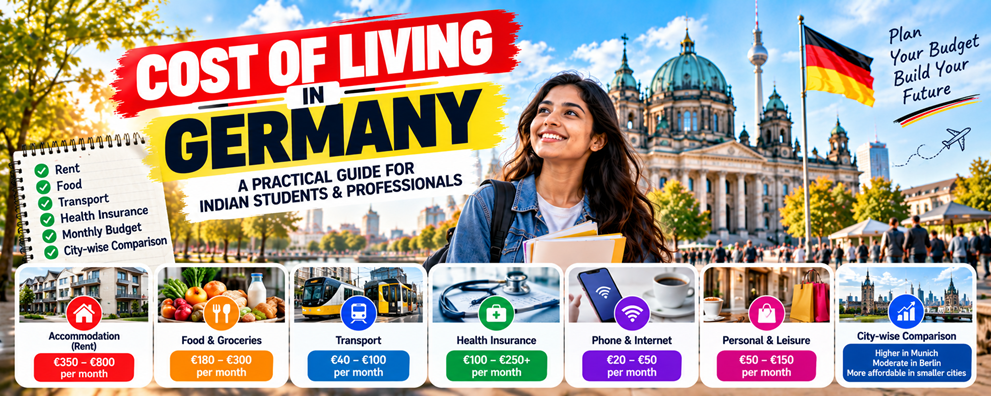
You must budget for rent, food, transport, insurance, and other living expenses.
Some school-based vocational programmes do not pay an allowance, although exceptions exist.
Important: Never assume that the allowance will cover every expense. Calculate your expected monthly budget before accepting a position.
There is no single school qualification that automatically makes every applicant eligible for every Ausbildung programme. Employers set requirements for their vacancies, and immigration rules add further conditions.
Indian applicants should assess the following areas.
Educational background
A Class 10 or Class 12 certificate, ITI qualification, diploma, or degree may be relevant depending on the occupation. The employer or training institution determines which qualifications it accepts.
German-language proficiency
German is an important part of the preparation process. The language level required depends on the occupation, employer, training provider, and visa conditions.
Age - generally 18-28 age for ausbuilding program
Motivation and suitability
Employers may assess your interest in the profession, communication skills, academic record, practical aptitude, and readiness to complete the training.
Financial preparation
You must meet the applicable visa requirements for living expenses. Whether the training allowance is sufficient for this purpose depends on its amount and the relevant rules.
The key principle is simple: check the requirements for the particular occupation, employer, and visa pathway rather than relying on a general eligibility claim.
For Indian candidates, learning German should be one of the first steps in preparing for Ausbildung.
You may need German to:
Understand lessons at vocational school.
Communicate with supervisors and colleagues.
Follow workplace safety instructions.
Interact with customers, patients, or clients where relevant.
Complete assessments and examinations.
Handle everyday activities such as accommodation and appointments.
For a vocational-training visa, B1-level German is generally expected when the relevant authority or training provider has not already assessed language proficiency or another applicable exception does not apply. Some employers and occupations may require a higher level.
Remember that a language certificate is not the same as being able to communicate confidently in a real workplace. Regular speaking, listening, and professional vocabulary practice are essential.
Ausbildung should not automatically be described as a completely free route to Germany.
In a company-based programme, the employer generally pays a training allowance, but applicants may still face costs before departure and after arrival.
Expense category | What to plan for |
|---|---|
German language training | Classes, learning materials and examinations |
Documentation | Certificates, translations and other required paperwork |
Application preparation | CV, correspondence and interview preparation |
Visa process | Applicable visa and service fees |
Travel | Flight and initial local transport |
Accommodation | Deposit, rent and initial household expenses |
Living costs | Food, transport, phone and personal expenses |
Financial evidence | Any additional amount required under the applicable visa rules |
The actual amount varies significantly by location and individual circumstances.
Before accepting an offer, prepare a realistic budget that includes your initial expenses, expected monthly costs, and a contingency fund.
Do not make a financial commitment based only on a promised future training allowance or an unverified job offer.
The application process requires preparation, research, and careful verification. The following steps provide a practical starting point.
Choose your occupation
Decide which vocational field suits your interests, education, and long-term goals. Research the actual duties, training duration, and entry requirements.
Prepare your German language skills
Begin language training early and work towards the proficiency level required by the employer, training programme, and visa route.
Prepare your application documents
Commonly requested documents may include your CV, educational certificates, language evidence, and a motivation letter. Requirements differ between employers.
Search for genuine training vacancies
Look for employers offering recognised training positions. Check the job description, employer details, training allowance, location, and application deadline.
Apply and attend interviews
Follow the employer's application process. Be prepared to explain why you selected the occupation and how your skills and interests fit the role.
Review the training contract
Before accepting, verify the occupation, training duration, allowance, working arrangements, and any conditions attached to the offer.
Apply for the appropriate visa
Once you understand your pathway and have the required documentation, follow the official German visa application process applicable to your circumstances.
Germany has a separate visa pathway for eligible people who want to enter the country to search for a vocational training place. It is not the same as a visa for someone who already has a confirmed training position.
According to the German Missions in India, this training-place search route generally has requirements including:
Being under 35 years of age.
Having a school-leaving qualification that permits university entrance.
Demonstrating German proficiency at B1 level.
Proving sufficient financial resources for the permitted stay.
The route can allow a stay of up to nine months for eligible applicants, subject to the applicable conditions.
Important: These are specific requirements for the training-place search pathway, not universal eligibility rules for every Ausbildung applicant. Verify the latest conditions before applying.
For many candidates, securing a suitable training contract from India and then applying through the relevant vocational-training visa route may be the more appropriate approach.
Successfully completing Ausbildung can provide a recognised vocational qualification and practical experience in your chosen occupation.
Your next step may be to apply for a suitable job, continue professional training, or specialise in your field.
For example:
A mechatronics graduate may explore roles in industrial maintenance or automation.
A logistics graduate may seek opportunities in warehouse operations or supply chain activities.
An IT graduate may pursue suitable technical positions.
A hospitality graduate may explore roles in hotel or restaurant operations.
These are possible career directions, not guaranteed outcomes.
Your prospects depend on your qualification, examination results, language ability, professional performance, employer requirements, and the labour market. Continuing to improve your skills can help you pursue further opportunities.
Which pathway makes more sense? It depends on the career you want.
Factor | Ausbildung | University study |
|---|---|---|
Main focus | Occupational training and practical skills | Academic and subject-based education |
Learning structure | Often combines company and vocational school | Lectures, seminars, projects and other academic work |
Duration | Commonly 2–3.5 years for dual training | Depends on degree and programme |
Income during programme | Company-based training generally includes an allowance | Depends on scholarships, permitted employment and other funding |
Typical outcome | Vocational qualification | Academic degree |
Suitable for | Those seeking structured preparation for a specific occupation | Those whose career goals require or benefit from a degree |
Neither option is universally better. Choose based on your career objectives, entry requirements, financial circumstances, and preferred learning style.
Before applying, watch out for these common mistakes.
Choosing only by salary: Consider job suitability, training quality, living costs, and long-term prospects.
Ignoring German: Language skills can be essential for training, workplace communication, and everyday life.
Trusting guaranteed-job claims: No intermediary can guarantee a visa or employment outcome.
Paying without verification: Check the employer, contract, programme, and fees before transferring money.
Confusing different visa routes: A training visa, training-place search visa, and skilled-worker visa serve different purposes.
Underestimating living costs: A training allowance may not cover every expense.
Applying without a clear career goal: A well-matched application is more useful than applying indiscriminately to unrelated occupations.
Q1. Can an Indian student apply for Ausbildung after Class 12?
Yes, it may be possible. The employer's educational requirements, occupation-specific criteria, language ability, and applicable visa conditions determine eligibility.
Q2. Can an ITI or diploma holder apply for Ausbildung?
Yes, an ITI or diploma holder can explore relevant training opportunities. Whether an employer accepts the existing qualification depends on the specific occupation and application requirements.
Q3. Is B1 German enough for Ausbildung?
B1 is generally the language level expected for the vocational-training visa when the relevant exception does not apply. Employers, schools, or specific occupations may require higher proficiency.
Q4. Do all Ausbildung programmes pay a monthly allowance?
No. Company-based dual training generally pays an allowance, while many school-based programmes do not. Certain exceptions exist, including some healthcare training programmes.
Q5. Is accommodation provided by the employer?
Not necessarily. Some employers may offer assistance or accommodation, but applicants should confirm the arrangements in writing and budget accordingly.
Q6. Is a job guaranteed after Ausbildung?
No. The qualification may support your job search, but employment depends on the employer, occupation, skills, performance, and applicable legal requirements.
Q7. Can I settle permanently in Germany after Ausbildung?
Completing Ausbildung does not automatically grant permanent residence. Eligible individuals may be able to move into employment and later qualify for other residence options if they satisfy the relevant legal conditions.
Ausbildung offers Indian candidates a structured route to learn a profession while gaining practical workplace experience. For those who prefer hands-on learning and want to develop occupational skills, it deserves serious consideration.
But preparation is essential. Understand your preferred occupation, learn German, check your eligibility, research legitimate employers, plan your finances, and follow the official visa process.
The goal is not simply to reach Germany. It is to build a qualification, develop professional skills, and create a sustainable career.
EFOS.in — Education Future One Stop
Explore your career direction, understand the available pathways, and prepare before making an international education or employment decision.
Contact: +91 9403890820
Website: www.efos.in
Series: Career in Germany — Article 2 of 20 | EFOS.in
Next in the series: Article 3 — Study in Germany: Courses, Costs, Scholarships and Career Prospects.