Education is undergoing one of the biggest transformations in history. Degrees alone are no longer enough to guarantee a job. Skills, adaptability, learning mindset, and value creation have become the new currency of the job market.
In this context, the book “You Will Not Get a Job” presents a bold and honest perspective about the future of education and employability. The title may sound negative at first glance, but the message behind it is deeply empowering. It challenges students to rethink their assumptions about careers, jobs, and learning.
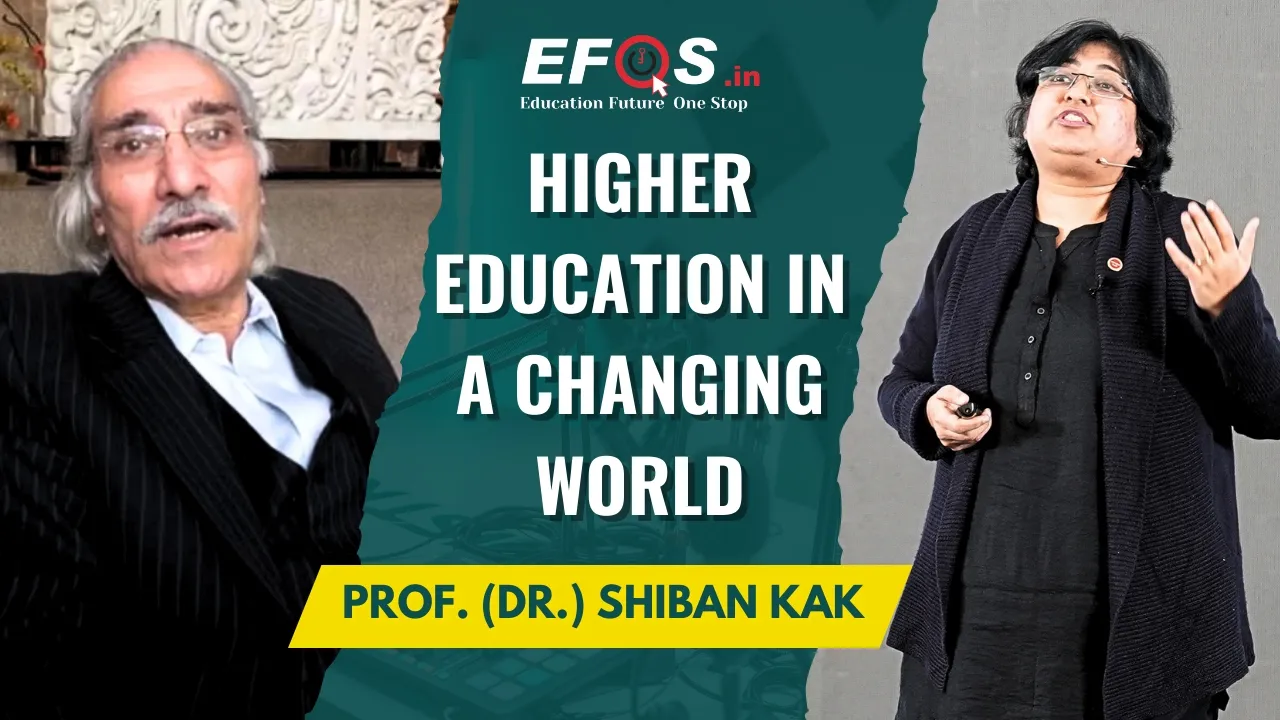
This article presents insights from a powerful conversation between Sachin Jain (Author of “You Will Not Get a Job”) and Prof. (Dr.) Shiban Koul, a distinguished leader in India’s higher education ecosystem. The discussion explores how education must evolve, why traditional career advice is outdated, and what students must do to succeed in the era of AI.
Watch the Full Conversation
(Embed the video here)
(You can embed the YouTube video of the conversation here in the blog.)
The Bold Idea Behind the Book
When readers first encounter the title “You Will Not Get a Job,” it can feel shocking. Even Prof. (Dr.) Shiban Koul admitted that the title initially surprised him.
However, the intention behind the title is not pessimism—it is a wake-up call.
For decades, students have been told a simple formula:
Study hard → Get a degree → Get a job.
But the world has changed.
Industries evolve rapidly. Technology disrupts traditional roles. Artificial Intelligence automates routine tasks. As a result, the old promise of guaranteed employment after graduation is no longer valid.
The book aims to trigger a realization among students:
Jobs are not given. Jobs are earned—or created.
This shift in mindset is the foundation of modern career success.
Why Degrees Alone Are No Longer Enough
According to Prof. (Dr.) Shiban Koul, the world is now producing millions of graduates every year, but what truly matters is not the degree—it is the ability to apply knowledge.
He highlights an important reality:
What matters today is not the certificate you hold, but what is inside your head and what you can do with it.
Throughout history, many great contributors to science, culture, and innovation did not rely on degrees alone.
For example:
-
Many innovators learned through experimentation.
-
Some great scientists had unconventional educational journeys.
-
Many successful entrepreneurs built skills outside formal classrooms.
The modern world rewards problem solvers, learners, creators, and innovators, not just degree holders.
Learning Is More Important Than Starting Salary
One of the powerful points discussed in the conversation is about career beginnings.
Many students focus only on salary packages when choosing their first job. However, the more important factor is learning opportunity.
For example, many graduates historically joined companies like TCS despite relatively lower starting salaries because those organizations offered:
-
exposure to new technologies
-
hands-on experience
-
learning opportunities
-
strong professional development
Within a few years, those individuals became far more valuable professionals.
The lesson is clear:
Your first job should maximize learning, not just income.
AI Is Changing the Future of Jobs
Artificial Intelligence is rapidly transforming industries.
Routine and repetitive tasks are increasingly being automated. This means many traditional job roles will either disappear or evolve significantly.
However, AI is not an enemy.
As highlighted in the discussion:
Students must learn to treat AI as a teammate rather than a threat.
AI will automate tasks such as:
-
repetitive data processing
-
basic administrative work
-
routine operational activities
But human skills will become more valuable, including:
-
creativity
-
critical thinking
-
problem solving
-
innovation
-
emotional intelligence
Those who learn to work with AI instead of competing against it will thrive.
The Biggest Problem in the Current Education System
One of the strongest critiques in the discussion focuses on outdated educational models.
Many universities are still teaching decades-old curricula, while industries have already moved ahead.
Some major issues include:
-
Static curricula that rarely change
-
Excessive focus on memorization
-
Limited hands-on experience
-
Lack of interdisciplinary learning
-
Weak industry integration
Prof. (Dr.) Koul emphasizes that education must move toward dynamic learning systems.
The Future: Outcome-Based and Project-Based Education
For decades, educational reformers have advocated for outcome-based education, where learning is measured by what students can actually do.
According to Prof. (Dr.) Koul, universities must shift toward:
1. Project-Based Learning
Students should build real projects instead of only studying theory.
2. Hands-On Experience
Learning by doing is essential for developing practical skills.
3. Team-Based Learning
Modern workplaces require collaboration, not isolated work.
4. Continuous Assessment
Evaluation should be ongoing rather than relying solely on final exams.
This approach ensures that graduates are job-ready and industry-ready.
Breaking the Silos of Traditional Education
Another major transformation required in education is the removal of rigid academic silos.
Traditional systems separate disciplines such as:
-
Mechanical Engineering
-
Electrical Engineering
-
Computer Science
-
Biology
But the future requires interdisciplinary knowledge.
For example:
Engineering students today must understand:
-
biology
-
data analytics
-
artificial intelligence
-
computational modeling
Similarly, biological sciences increasingly rely on:
-
mathematics
-
machine learning
-
computational tools
The future belongs to cross-domain thinkers.
Four Changes Universities Must Make to Survive
According to Prof. (Dr.) Koul, universities must make four major changes in the next few years.
1. Flexible Curriculum
Students should be able to choose courses through choice-based credit systems, allowing personalized learning paths.
2. Project-Driven Education
Learning must focus on real problem solving, not just theoretical knowledge.
3. Transparent and Continuous Assessment
Evaluation systems must be fair, continuous, and aligned with real learning outcomes.
4. Integration of AI in Education
Universities must actively integrate AI for:
-
learning support
-
self-evaluation
-
research assistance
-
innovation and creativity
AI should become a learning partner for students.
Entrepreneurship Is Not an Escape Route
The conversation also addresses a common misconception.
Many students turn toward entrepreneurship simply because they cannot find a job.
However, entrepreneurship is not an easy alternative.
In fact, it is often more demanding than employment.
Entrepreneurs must be ready for:
-
uncertainty
-
financial risks
-
repeated failures
-
long working hours
-
constant problem solving
But for those who succeed, entrepreneurship can also be extremely rewarding.
The real motivation for entrepreneurship should be value creation and innovation, not job avoidance.
A Message for Students
Students must rethink how they approach education.
Instead of chasing degrees, they should focus on:
-
learning continuously
-
developing real skills
-
building projects
-
experimenting with ideas
-
staying adaptable
Most importantly, they must cultivate a mindset of lifelong learning.
A Message for Parents
Parents must also evolve their expectations.
For many decades, parents pushed children toward traditional career paths and stable jobs.
But the world today is far more dynamic.
Parents should:
-
allow children to explore their strengths
-
avoid forcing career decisions
-
support skill development
-
encourage curiosity and experimentation
A supportive environment helps students discover their true potential.
Choosing the Right University
Students must also choose universities carefully.
Instead of focusing only on brand names or marketing promises such as “100% placement,” they should ask deeper questions:
-
How is learning delivered?
-
Is the curriculum updated regularly?
-
Are there strong internships and projects?
-
Does the institution encourage innovation?
-
Are interdisciplinary courses available?
The quality of learning matters far more than promotional claims.
The Real Message of “You Will Not Get a Job”
Despite its provocative title, the message of the book is ultimately positive.
The future may not guarantee jobs automatically.
But it will reward those who are:
-
adaptable
-
skilled
-
curious
-
innovative
-
willing to create value
The new era belongs to individuals who take responsibility for their own growth.
EFOS: Supporting the Future of Education and Careers
At EFOS (Education Future One Stop), the mission is to help students navigate this changing landscape.
EFOS works to connect young people—especially from Tier-2 and Tier-3 regions—to the right opportunities in education, skills, and careers.
With over 200,000 candidate profiles and thousands of successful placements, EFOS continues to build pathways that focus on:
-
outcome-based education
-
industry-aligned skills
-
career mentorship
-
practical learning opportunities
The goal is simple:
To help the next generation become creators of value rather than seekers of guaranteed jobs.
Final Thought
The title may say “You Will Not Get a Job.”
But the deeper truth is:
You can create opportunities far greater than a job—if you are willing to learn, adapt, and build value for the world.