You've spent years studying, passed countless exams, and earned your degree. But when you step into your first interview, something feels off. The recruiter asks about skills you've never heard of in class. They want to see portfolios, GitHub repositories, and real-world project experience—not just your GPA.
If this sounds familiar, you're not alone. There's a growing disconnect between what colleges teach and what industries actually need. This gap affects millions of students worldwide, leaving many graduates unprepared for the job market despite their academic achievements.
Let's explore this challenge with research-backed insights and, more importantly, discover what you can do about it.
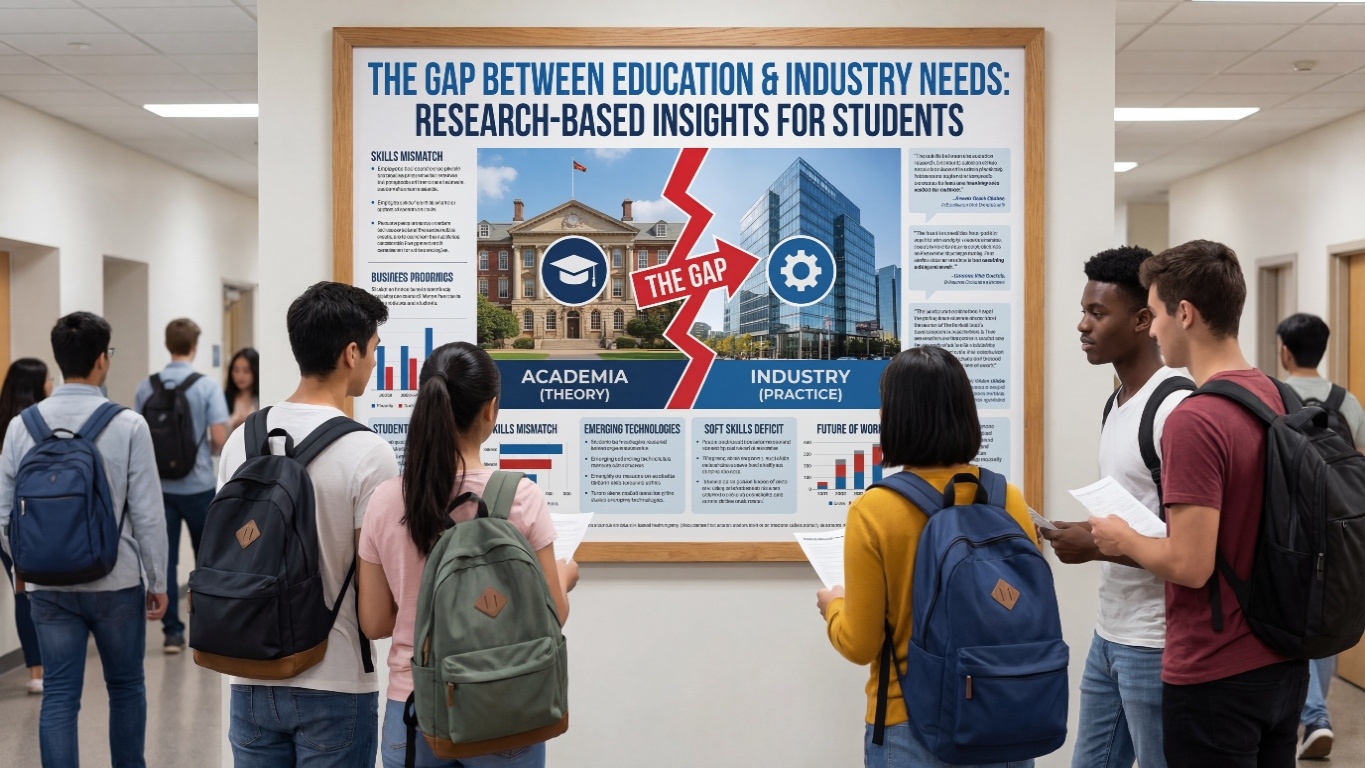
The education-industry gap refers to the mismatch between the knowledge and skills students acquire through formal education and the competencies employers require in the modern workplace. It's not that your education is worthless—it's that the world of work evolves faster than academic curricula can keep pace.
Research paints a concerning picture:
The gap isn't just about technical skills. Employers consistently report that graduates lack critical soft skills like communication, problem-solving, and adaptability.
Academic institutions operate on multi-year cycles for curriculum revision. By the time a new course is approved, designed, and implemented, the industry landscape may have already shifted. For example, when many universities were just introducing basic data science courses, the industry had already moved toward advanced machine learning and AI applications.
Traditional education emphasizes theoretical knowledge and conceptual understanding. While this foundation is valuable, many programs lack hands-on, practical experience. You might understand algorithms in theory but have never deployed a real application. You know marketing principles but haven't run an actual campaign with budget constraints and real stakeholders.
Many academic programs operate in silos, with minimal input from industry professionals. Guest lectures happen occasionally, but sustained partnerships where industry experts help shape curricula are rare. This disconnect means professors—who are often excellent researchers—may not always be aware of current industry practices and emerging trends.
Technology evolves exponentially, not linearly. Cloud computing, artificial intelligence, blockchain, and automation are transforming industries at unprecedented speeds. Educational institutions, bound by tradition and bureaucratic processes, struggle to keep up with this pace of change.
The traditional education system prioritizes grades, exams, and standardized testing over skill development and practical competency. You're rewarded for memorizing information rather than applying knowledge creatively or solving ambiguous real-world problems.
Digital Literacy: Beyond basic computer skills, employers expect proficiency with industry-standard software, data analytics tools, and emerging technologies relevant to your field.
Programming and Automation: Even non-technical roles increasingly require basic coding knowledge or understanding of automation tools. Marketing professionals need to understand marketing automation platforms, HR professionals work with HRMS software, and finance teams use advanced Excel and data visualization tools.
Data Skills: The ability to work with data—collecting, analyzing, interpreting, and presenting insights—is becoming essential across all fields.
Research consistently shows that employers value soft skills as much as, if not more than, technical knowledge:
Communication Skills: Can you explain complex ideas simply? Write clear emails? Present confidently? Many graduates struggle with professional communication, both written and verbal.
Critical Thinking and Problem-Solving: The ability to analyze situations, think creatively, and develop solutions is crucial. Employers don't want people who just follow instructions—they want problem solvers.
Adaptability and Learning Agility: With rapid change being the norm, the ability to learn quickly and adapt to new situations is invaluable. Your willingness to step outside your comfort zone matters more than knowing everything from day one.
Collaboration and Teamwork: Most work happens in teams, often across departments and geographies. Understanding how to work effectively with diverse groups is essential.
Emotional Intelligence: Self-awareness, empathy, and the ability to manage relationships professionally are increasingly recognized as key success factors.
Here's a frustrating paradox: Entry-level jobs require experience, but how do you gain experience without getting hired first? Employers want candidates who understand workplace dynamics, professional etiquette, and can contribute from day one. Internships help, but not all students have access to quality internship opportunities.
Many graduates send out hundreds of applications with minimal response. The skills listed in job descriptions seem overwhelming. Imposter syndrome kicks in. You wonder if your degree was worth it.
Even when you land a job, it might not match your qualifications or aspirations. Studies show significant numbers of graduates work in roles that don't require a degree, leading to frustration and financial stress, especially when student loans are involved.
Employers increasingly view fresh hires as requiring 6-12 months of training before they become truly productive. This extended onboarding period affects your confidence and career progression.
The stress of feeling unprepared, facing rejection, and struggling to launch your career takes a toll. Anxiety and self-doubt are common among recent graduates navigating this gap.
The good news? You're not helpless. Here are research-backed strategies to prepare yourself for industry success:
Don't wait for your curriculum to teach you everything. Take charge of your own learning:
Internships: Treat internship hunting as seriously as job hunting. Even unpaid or short-term internships provide invaluable exposure.
Projects: Build your own projects. Create a portfolio website if you're in tech or design. Start a blog if you're in content or marketing. Develop case studies if you're in business.
Freelancing: Platforms like Upwork, Fiverr, or Freelancer allow you to work on real projects for real clients, building both skills and portfolio.
Competitions and Hackathons: Participate in case competitions, hackathons, or challenges relevant to your field. These provide practical problem-solving experience and networking opportunities.
Join Clubs and Organizations: Leadership roles in student organizations develop teamwork, communication, and management skills.
Practice Public Speaking: Join Toastmasters or take every opportunity to present in class. Communication skills can be learned and improved.
Seek Feedback: Actively ask professors, mentors, and peers for feedback on your communication and collaboration skills.
Read Widely: Books on emotional intelligence, leadership, and professional development complement your technical studies.
LinkedIn Optimization: Create a professional LinkedIn profile and actively engage with content in your industry.
Informational Interviews: Reach out to professionals in roles you aspire to. Most people are willing to share their insights over a coffee chat or video call.
Alumni Networks: Your university's alumni are often willing to help fellow graduates. Don't hesitate to reach out.
Industry Events: Attend conferences, webinars, and workshops. Virtual events make this easier and more affordable than ever.
Apply Classroom Concepts: When learning theory, immediately think about real-world applications. How would this marketing concept work for a local business? How could this algorithm solve an actual problem?
Stay Current: Supplement your textbooks with current industry publications, research papers, and case studies.
Ask Different Questions: In class, don't just ask "Will this be on the exam?" Ask "How is this used in practice?" and "What are the current debates around this topic?"
Portfolio or Blog: Document your learning journey. Write about projects, share insights, or showcase your work.
GitHub for Developers: If you're in tech, maintain an active GitHub profile with clean, documented code.
Content Creation: Share knowledge in your field through articles, videos, or social media posts. This demonstrates both expertise and communication skills.
Some institutions are taking proactive steps to close the gap:
Industry Advisory Boards: Universities are forming boards of industry professionals to provide input on curriculum design.
Project-Based Learning: More programs are incorporating capstone projects, case competitions, and real-world challenges into curricula.
Co-op Programs: Cooperative education models that integrate multiple work terms into degree programs are expanding.
Skill Certifications: Some institutions are partnering with industry to offer recognized certifications alongside degrees.
Flexible Micro-Credentials: Universities are developing shorter, focused programs that can be quickly updated to address emerging skill needs.
If you're still choosing your educational path, consider programs that offer:
Bootcamps, online certificates, and alternative education providers have emerged to address the gap. These programs often:
Rather than choosing between traditional and alternative education, many successful professionals combine both. A university degree provides foundational knowledge, critical thinking skills, and credibility, while bootcamps and certifications add specific, current technical skills.
As we look forward, certain capabilities are likely to remain valuable regardless of specific technologies:
Learning How to Learn: The ability to quickly acquire new skills will be more important than any specific skill set.
Creativity and Innovation: As AI handles routine tasks, uniquely human creative thinking becomes more valuable.
Complex Problem-Solving: The ability to tackle ambiguous, multi-faceted challenges won't be easily automated.
Emotional Intelligence and Interpersonal Skills: Human connection, empathy, and collaboration remain distinctly human strengths.
Education itself is being reimagined. We're moving toward:
The gap between education and industry needs is real, well-documented, and affects millions of students. But it's not insurmountable. Understanding this gap is the first step. Taking action is the second.
Your formal education provides a foundation—critical thinking, domain knowledge, and learning frameworks. But it's up to you to build the complete structure of career readiness on that foundation.
Start today. Choose one skill to develop, one project to start, or one professional to connect with. Small, consistent actions compound over time. By the time you graduate (or even if you've already graduated), you'll have created your own bridge across the education-industry gap.
The future belongs to those who take responsibility for their own learning and development. Don't wait for the perfect curriculum—be proactive, stay curious, and keep building the skills that will make you invaluable in tomorrow's workplace.