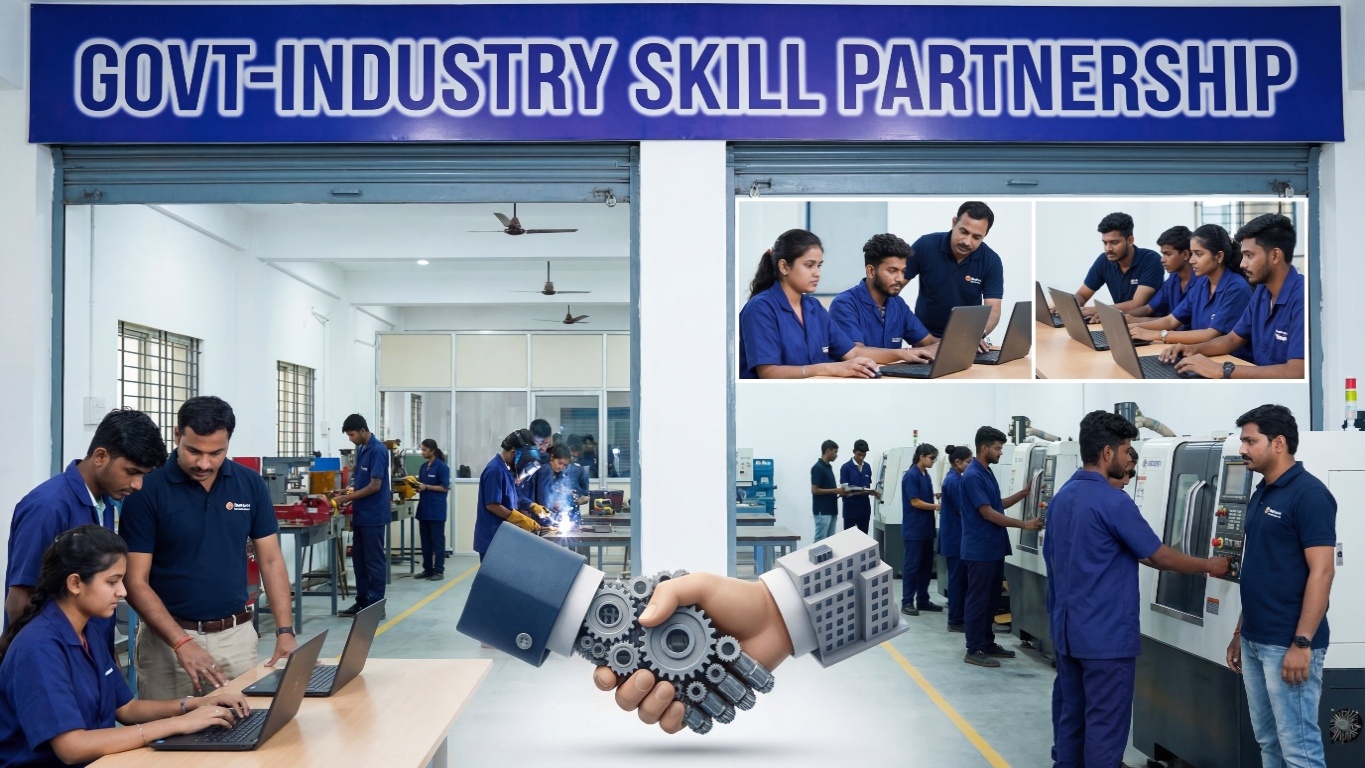
India is moving rapidly toward becoming a global skill hub. But to meet the growing demand for industry-ready professionals, traditional education alone isn’t enough. This is where Public–Private Partnerships (PPP) come in—powerful collaborations between the government and private companies that are reshaping how students learn, train, and get jobs.
In this blog, you’ll understand how PPP works, why it matters, and how it is changing career opportunities for millions of students.
PPP refers to collaborations between government bodies and private sector organizations to design, fund, and implement skill-based training programs.
These partnerships combine:
Together, they create training programs that directly match industry needs.
Many graduates struggle to find jobs because they lack practical, industry-ready skills.
PPP programs bring industry-level training into classrooms and training centers, closing this gap.
Through private sector involvement, students get:
This makes learning practical and job-oriented.
Companies provide training using:
This exposes students to the technologies they will use in future workplaces.
Most PPP programs include placement support, and industries often hire directly from these training batches.
Several national programs work under the PPP model:
Over 500+ private partners deliver courses in IT, healthcare, retail, manufacturing, and more.
Training centers run by private institutes under government funding provide free courses for youth.
Companies like Tata, Maruti, Infosys, and L&T offer on-the-job training with government incentives.
Under Corporate Social Responsibility (CSR), companies invest in skill development.
Examples:
These initiatives bring world-class training closer to students.
Colleges and schools collaborate with private industries to update curriculum and training models.
Common examples:
This ensures students learn exactly what companies need.
EdTech platforms are also part of PPP, offering online courses and virtual labs.
Students now gain advanced skills like:
Even from rural areas.
PPP programs make quality training accessible to all students—not just those from big cities.
Industry experts regularly update syllabus to keep pace with technology.
Companies hiring directly from PPP-trained students reduces unemployment.
PPP-run training centers in rural India bring opportunities to underserved youth.
Corporate trainers & online modules ensure quality instruction.
These are just a few examples of how PPP is creating real career opportunities.
This portal lists government + industry skill programs.
Paid training + work experience = guaranteed career boost.
Most offer free or discounted courses.
Ask your institution about industry collaborations.
Public–Private Partnerships are reshaping the future of education and employment in India. These collaborations help students gain industry-relevant skills, practical experience, and job-ready confidence.
With PPP-driven training, India is not just producing degree holders—but future-ready professionals.