In today’s world, getting good marks is important—but it’s not enough. To succeed in college, jobs, or even entrepreneurship, students need more than academic knowledge.
They need soft skills—the personal abilities that help you communicate well, work in teams, solve problems, and grow as a confident individual.
Soft skills are the real game changers that employers look for in interviews and that students need for everyday success.
This blog explains the top soft skills every student must develop to achieve career success.
🌟 What Are Soft Skills?
Soft skills are personal qualities that help you interact effectively with others.
They are not taught in textbooks but can be learned and practiced daily.
Examples include:
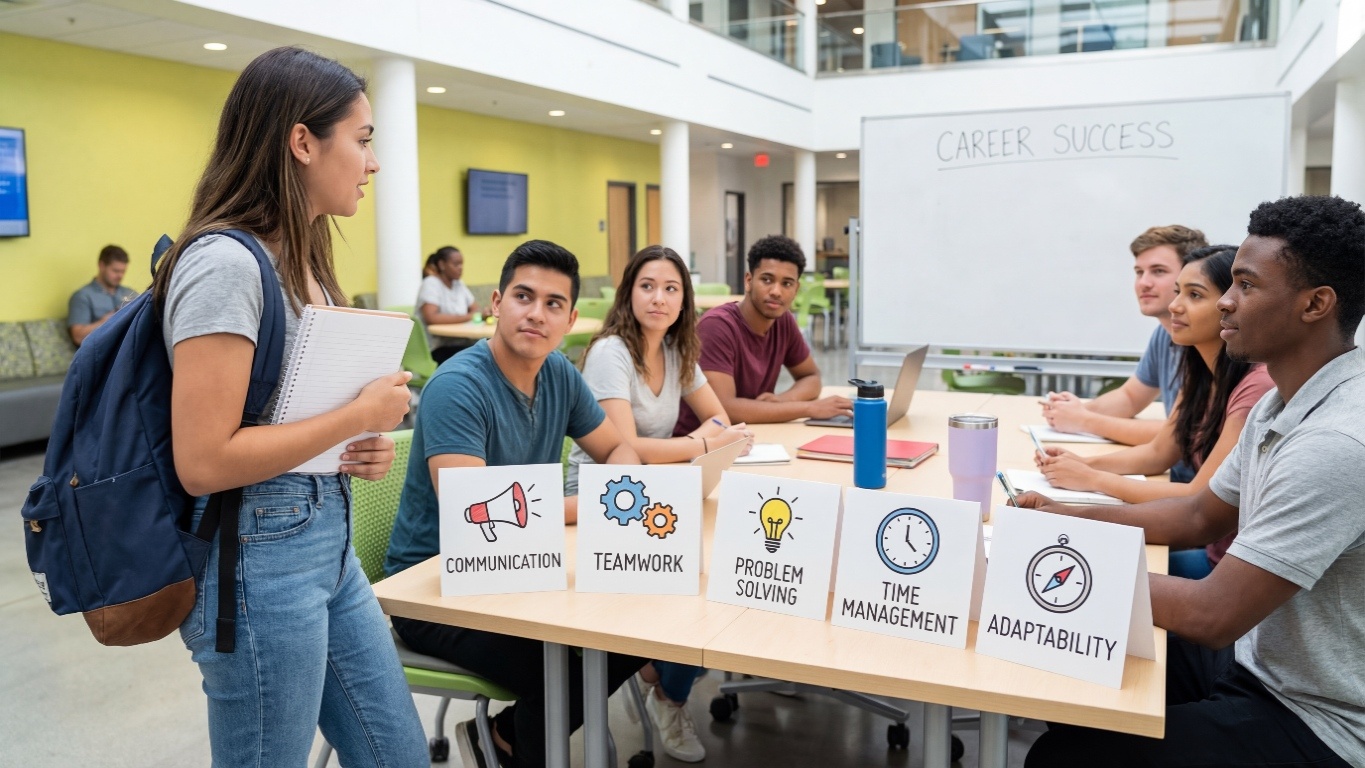
- Communication
- Teamwork
- Problem-solving
- Leadership
- Emotional intelligence
Soft skills matter in every field—engineering, business, arts, healthcare, teaching, or entrepreneurship.
⭐ Why Soft Skills Are Important for Students
✔ Improve communication
✔ Build confidence
✔ Enhance teamwork
✔ Increase chances of getting hired
✔ Improve productivity and time management
✔ Reduce stress and build resilience
✔ Help in interviews, presentations & group discussions
Employers say:
“We can train technical skills, but we want students who can think, communicate, and adapt.”
💬 1. Communication Skills
Communication is the most important soft skill.
Includes:
- Speaking clearly
- Active listening
- Writing emails or messages
- Presentation skills
Why it matters:
Good communicators express their ideas confidently, work well in teams, and perform better in interviews.
How to improve:
- Practice public speaking
- Read daily
- Record yourself speaking
- Improve grammar using tools like Grammarly
🤝 2. Teamwork & Collaboration
Every career—whether corporate, research, or creative—requires teamwork.
Why it matters:
- Helps students work in groups
- Improves cooperation
- Reduces conflicts
- Encourages creativity
How to improve:
- Participate in group projects
- Join clubs or competitions
- Learn to appreciate others' opinions
🎯 3. Problem-Solving & Critical Thinking
Employers want students who can think beyond textbooks.
Why it matters:
- Helps you make smart decisions
- Improves innovation
- Helps in exams, interviews & life situations
How to improve:
- Solve puzzles and case studies
- Ask questions like “Why?” and “How?”
- Analyze situations before reacting
⏳ 4. Time Management
Students often struggle with deadlines, assignments, and exam pressure.
Why it matters:
- Reduces stress
- Improves productivity
- Helps you balance studies and personal life
How to improve:
- Use planners or apps (Google Calendar, Todoist)
- Prioritize important tasks
- Avoid multitasking
🧠 5. Emotional Intelligence (EQ)
Emotional intelligence is the ability to understand and manage your own emotions—and others’.
Why it matters:
- Improves relationships
- Helps handle stress
- Makes you a better leader
- Reduces conflicts
How to improve:
- Practice empathy
- Stay calm during disagreements
- Reflect on your behavior daily
💡 6. Creativity & Innovation
Creativity is not just for artists—it is useful in every field.
Why it matters:
- Helps you think uniquely
- Improves problem-solving
- Makes you stand out from others
How to improve:
- Try brainstorming
- Learn a creative skill (design, writing, coding)
- Keep a journal to note ideas
📢 7. Leadership Skills
Leadership is not about giving orders—it is about inspiring others.
Why it matters:
- Builds confidence
- Helps in managing teams
- Essential for career growth
How to improve:
- Take initiative in projects
- Volunteer for responsibilities
- Learn to motivate others
💻 8. Digital Literacy
In the modern world, every student must understand basic technology.
Why it matters:
- Helps with online learning
- Increases job opportunities
- Improves efficiency in work
How to improve:
- Learn MS Office basics
- Upgrade your computer skills
- Take free online courses
📝 9. Adaptability & Flexibility
The world is changing fast—careers, technology, and opportunities shift constantly.
Why it matters:
- Helps students stay relevant
- Makes you open to new ideas
- Improves ability to learn new skills
How to improve:
- Try new experiences
- Stay updated with trends
- Be open to feedback
🧩 10. Decision-Making Skills
Strong decision-making sets successful students apart.
Why it matters:
- Helps you choose the right career
- Improves confidence
- Reduces confusion and hesitation
How to improve:
- Evaluate pros and cons
- Trust your analysis
- Learn from past mistakes
🗣️ 11. Public Speaking & Presentation Skills
A must-have for career success.
Why it matters:
- Helps in interviews
- Required for seminars, projects, and workplace meetings
- Builds confidence
How to improve:
- Practice with friends
- Join debating clubs
- Watch TED Talks
🤹 12. Networking Skills
Your network can shape your career.
Why it matters:
- Helps students find internships
- Improves visibility
- Connects you with mentors
How to improve:
- Use LinkedIn
- Attend workshops & events
- Talk to seniors and teachers
🥇 How Students Can Start Building Soft Skills Today
Here are simple habits that help you improve daily:
- Join extracurricular activities
- Communicate clearly and politely
- Take responsibility in projects
- Keep learning new things
- Work on confidence and body language
- Practice reading and writing regularly
🌟 Conclusion: Soft Skills Build Successful Futures
Soft skills are not taught in classrooms, but they are essential for success in school, careers, and life.
Students who build strong soft skills stand out in exams, interviews, and workplaces.
Remember:
Your degree gets you in the door, but your soft skills build your future.
Start early, practice daily, and grow into the best version of yourself.