The job market is evolving faster than ever before. As a student preparing for your future career, you might be wondering which skills will actually help you land your dream job and build a successful career. The good news? You don't need to master everything at once. By focusing on the right skills now, you can set yourself up for amazing opportunities in the years ahead.
Let's explore the most valuable skills that employers are actively seeking in 2025 and beyond.
Before we dive into specific skills, let's talk about why this matters to you. Traditional education gives you foundational knowledge, but the workplace demands practical, applicable skills that solve real-world problems. Companies aren't just looking for good grades anymore—they want candidates who can hit the ground running and adapt to change quickly.
By developing these in-demand skills while you're still a student, you'll stand out from the crowd, open doors to better internships, and potentially start your career with a higher salary and more exciting opportunities.
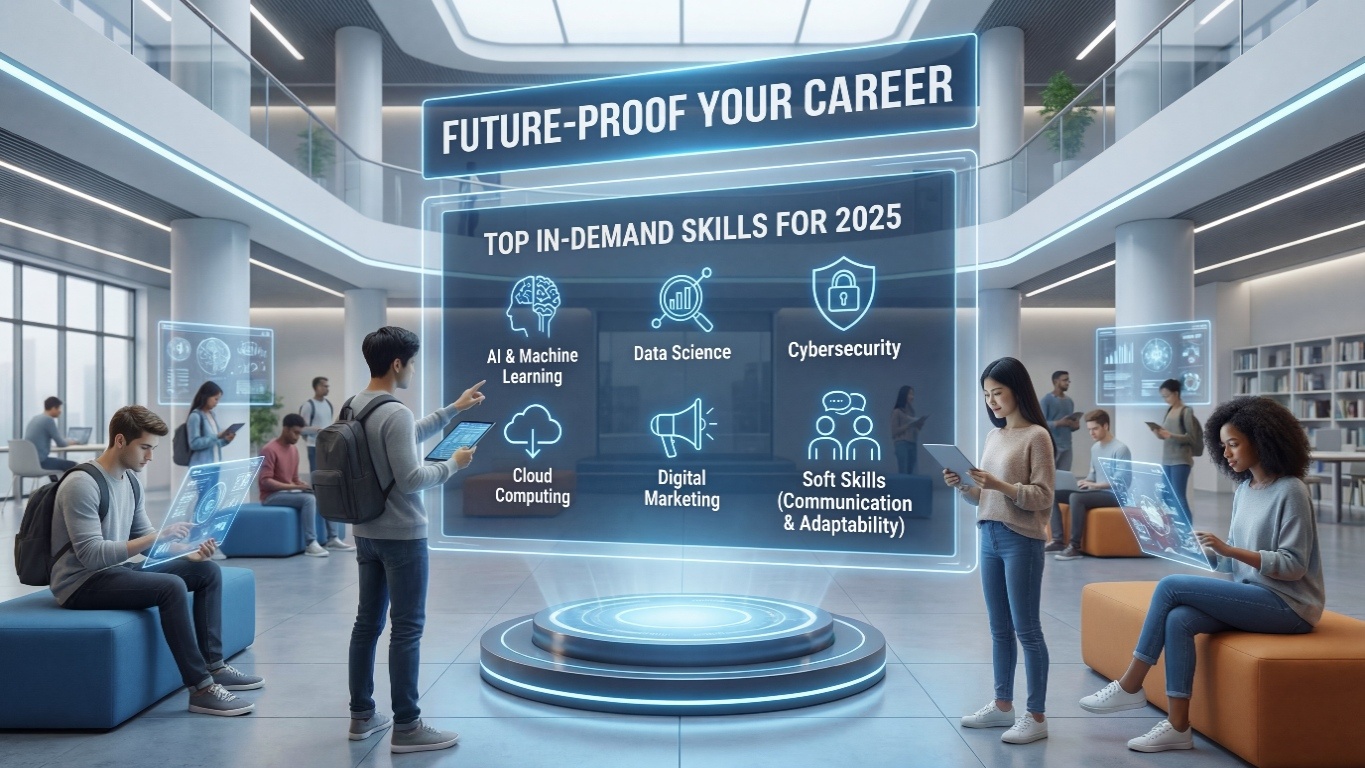
AI isn't science fiction anymore—it's everywhere. From chatbots to recommendation systems, companies across all industries are integrating AI into their operations.
Why it matters: AI is transforming every sector, from healthcare to finance to entertainment. Understanding how AI works gives you a competitive edge in almost any field.
How to get started:
Career paths: Machine Learning Engineer, AI Research Scientist, Data Scientist, AI Product Manager
Data is called "the new oil" for a reason. Every company collects massive amounts of data, but they need people who can make sense of it and turn it into actionable insights.
Why it matters: Being able to analyze data and present findings clearly makes you valuable in marketing, finance, operations, healthcare, and virtually every other field.
How to get started:
Career paths: Data Analyst, Business Intelligence Analyst, Marketing Analyst, Financial Analyst
As businesses move their operations online, cloud platforms like AWS, Microsoft Azure, and Google Cloud are becoming essential infrastructure.
Why it matters: Companies need professionals who can manage, secure, and optimize their cloud infrastructure. This skill is particularly valuable because there's a shortage of qualified cloud professionals.
How to get started:
Career paths: Cloud Engineer, Cloud Architect, DevOps Engineer, Systems Administrator
With cyber threats increasing every year, companies are desperate for people who can protect their digital assets and customer data.
Why it matters: Data breaches cost companies millions and damage their reputation. Cybersecurity professionals are among the highest-paid and most sought-after tech workers.
How to get started:
Career paths: Cybersecurity Analyst, Penetration Tester, Security Engineer, Chief Information Security Officer
Building websites and applications remains one of the most practical and in-demand skills. Full-stack developers who can handle both front-end and back-end development are especially valuable.
Why it matters: Every business needs a digital presence, and being able to create functional, attractive applications makes you immediately employable.
How to get started:
Career paths: Full-Stack Developer, Front-End Developer, Back-End Developer, Software Engineer
Technical skills might get you the interview, but soft skills often determine whether you get the job and succeed in it. These human skills are becoming more valuable as AI handles routine tasks.
Employers don't just want people who follow instructions—they want creative problem solvers who can tackle unexpected challenges.
Why it matters: In a rapidly changing world, the ability to analyze situations, think independently, and devise innovative solutions is invaluable.
How to develop it:
You might be the smartest person in the room, but if you can't explain your ideas clearly, they won't have impact. Strong communication includes writing, speaking, and listening.
Why it matters: You'll need to present ideas, write emails, collaborate with teams, and possibly lead meetings. Poor communication leads to misunderstandings, delays, and missed opportunities.
How to develop it:
Almost every modern job requires working with others. Being a good team player means knowing how to contribute, compromise, and bring out the best in others.
Why it matters: Projects are increasingly complex and require diverse skill sets. Companies value people who can work well in teams and contribute to a positive work culture.
How to develop it:
The only constant is change. Technologies evolve, industries shift, and new challenges emerge constantly. Your ability to learn quickly and adapt determines your long-term success.
Why it matters: The skills you learn today might be outdated in five years. Being able to continuously learn and adapt ensures you stay relevant throughout your career.
How to develop it:
Beyond specific technical skills, having general comfort with technology and the ability to quickly learn new tools is essential.
Why it matters: Every job now involves technology. Being tech-savvy means you can work efficiently, troubleshoot problems, and adopt new tools quickly.
How to develop it:
Knowing how to plan, execute, and deliver projects on time and within budget is valuable in every field.
Why it matters: Companies need people who can manage initiatives from start to finish, coordinate teams, and ensure goals are met.
How to develop it:
Career paths: Project Manager, Program Manager, Product Manager, Operations Manager
Understanding how businesses make money, basic accounting principles, and financial planning helps you make better decisions in any role.
Why it matters: Even if you're not in finance, understanding business fundamentals helps you see the bigger picture and contribute more strategically.
How to develop it:
With businesses fighting for attention online, the ability to create engaging content and understand digital marketing is extremely valuable.
Why it matters: Every company needs to market itself online. Understanding content strategy, SEO, social media, and email marketing opens many doors.
How to develop it:
Career paths: Content Marketer, Social Media Manager, Digital Marketing Specialist, Brand Strategist
Creating user-friendly, attractive digital experiences is crucial as everything moves online.
Why it matters: Bad design frustrates users and costs companies money. Good designers who understand both aesthetics and functionality are always in demand.
How to develop it:
Career paths: UX Designer, UI Designer, Product Designer, Interaction Designer
Feeling overwhelmed? That's normal. You can't learn everything at once, so here's how to prioritize:
Consider your interests: Start with skills that genuinely excite you. You'll learn faster and stick with it longer.
Research your target industry: Look at job postings in your desired field and note which skills appear repeatedly.
Start with foundational skills: Basic data analysis, communication, and digital literacy support almost any career path.
Combine technical and soft skills: The most successful people aren't just technically proficient—they can also work well with others and communicate effectively.
Focus on transferable skills: Skills like critical thinking, learning agility, and problem-solving serve you well regardless of career changes.
Don't just randomly take courses. Set clear goals, create a timeline, and dedicate specific time each week to skill development.
Theory is important, but nothing beats hands-on experience. Build things, make mistakes, and learn by doing.
Connect with others learning the same skills through online forums, Discord servers, or local meetups. Learning is more fun and effective with others.
Document your learning journey and projects. A strong portfolio showcasing your skills is worth more than just listing them on a resume.
Share your work with mentors, peers, or online communities and ask for constructive criticism. This accelerates your learning dramatically.
Learning a new skill takes time. Even 30 minutes a day adds up to significant progress over months.
The future belongs to lifelong learners who combine technical expertise with strong human skills. You don't need to master every skill on this list, but developing a strong foundation in several key areas will dramatically improve your career prospects.
Start today with one skill that interests you. Take a free online course, build a small project, or join a community of learners. The investment you make in yourself now will pay dividends throughout your entire career.
Remember, employers aren't looking for perfect candidates who know everything—they're looking for motivated individuals who can learn, adapt, and contribute. By proactively developing these in-demand skills, you're showing exactly that kind of initiative.
Your future career is in your hands. What skill will you start learning today?