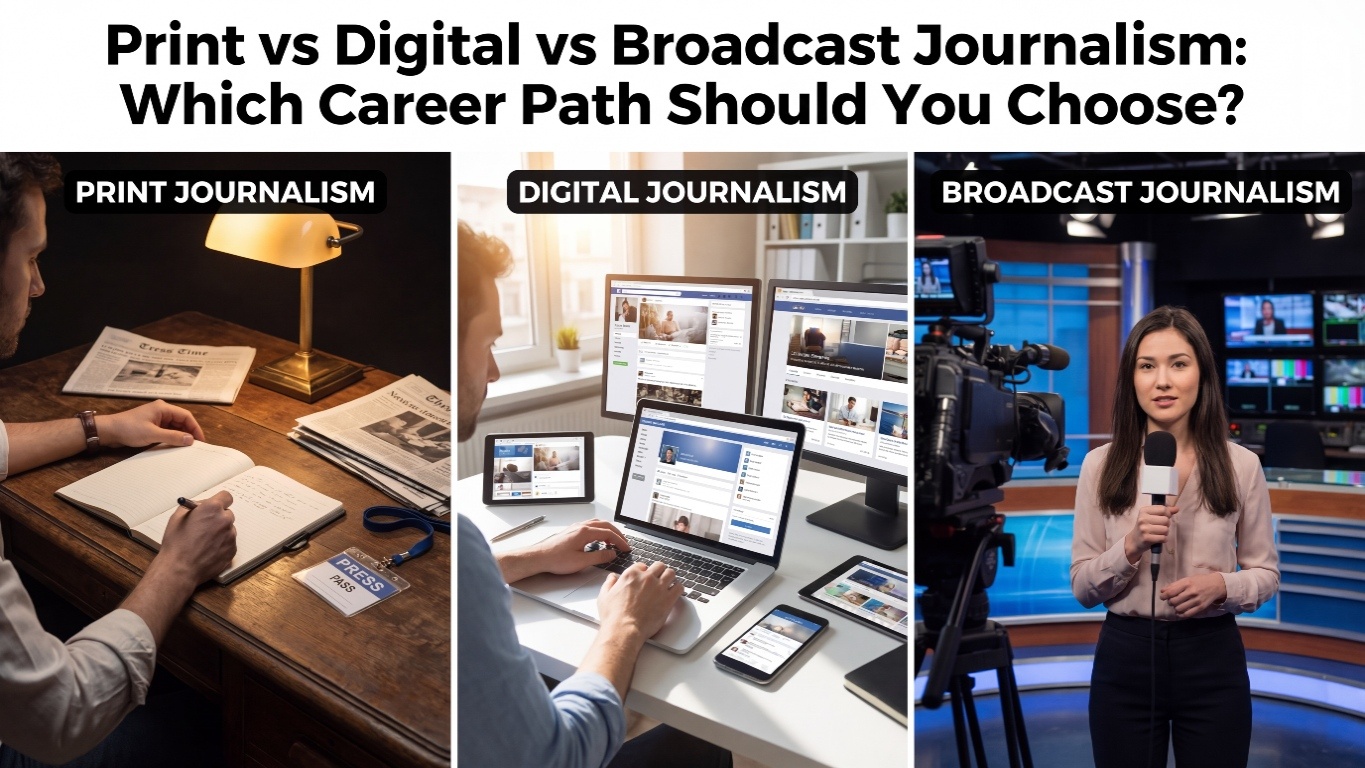
Hey there, future journalist! Dreaming of breaking news stories, interviewing celebs, or uncovering hidden truths? Journalism is an exciting field, but with so many paths—print, digital, and broadcast—it's tough to pick one.
This guide breaks it down simply: what each path involves, the pros and cons, job vibes, and tips to choose what's right for you. No jargon, just real talk to help you decide.
Print journalism is the classic path—think newspapers, magazines, and books. Reporters write in-depth articles that hit newsstands or mailboxes.
It's perfect if you enjoy quiet research and crafting narratives like a detective novelist.
Digital journalism lives online—news sites, blogs, social media, and apps like BuzzFeed or The Verge. It's fast, multimedia, and always evolving.
Ideal for tech-savvy students who thrive on quick hits and audience interaction via comments or shares.
Broadcast is all about TV, radio, and streaming (like podcasts or YouTube lives). You're on air, delivering news with voice, face, and energy.
Great for outgoing types who shine in front of crowds or mics.
Each path has upsides and challenges. Here's a quick table to compare:
| Aspect | Print Journalism | Digital Journalism | Broadcast Journalism |
|---|---|---|---|
| Creativity | High (deep stories) | Very high (multimedia) | High (on-camera presence) |
| Pay (Entry-Level) | $40K–$60K | $45K–$65K | $50K–$70K (with perks) |
| Job Stability | Declining (print sales down) | Growing (online boom) | Steady (TV/streaming demand) |
| Work Hours | Flexible, office-based | 24/7, remote-friendly | Irregular, evenings/weekends |
| Skills Needed | Writing, research | SEO, video editing, social media | Speaking, charisma, tech |
| Pros | Job satisfaction, bylines | Flexibility, global reach | Fame potential, travel |
| Cons | Layoffs, shrinking industry | Burnout from speed | Public scrutiny, competition |
Note: Salaries based on U.S. averages from 2024 data; check local markets.
No matter the path, core journalism skills like ethics, fact-checking, and curiosity are key. But specialize like this:
Start building a portfolio now—clip articles, vlogs, or podcasts.
Journalism is changing fast with AI and social media, but demand is up 5–10% by 2030 (per BLS data).
Freelance across all for flexibility. Pro tip: Hybrid skills (e.g., digital + broadcast) win big.
Watch their paths: print folks pivot digital, broadcasters go viral.
Ask yourself these to decide:
Try internships: School paper for print, campus TikTok for digital, radio club for broadcast. Network on LinkedIn!
Print offers timeless depth, digital gives speed and reach, broadcast delivers star power—no "best" path, just the one sparking your passion. Experiment, build skills, and stay ethical. The world needs storytellers like you!
What's your pick, or got questions? Drop a comment below.
Ready to dive in? Check out free courses on Coursera (Journalism Basics) or J-School directories.