How to Improve Communication Skills: Tips for Students & Young Professionals
  • By Admin
  • 12 Dec, 2025

How to Improve Communication Skills: Tips for Students & Young Professionals

Communication is one of the most important life skills every student and young professional must develop. Whether you’re preparing for board exams, college presentations, interviews, internships, or your first job—your ability to communicate clearly can make a huge difference.

Good communication helps you express your ideas confidently, build stronger relationships, and stand out in school or workplace environments.

This blog will guide you with practical, easy-to-follow tips that improve communication skills step-by-step.

🌟 Why Good Communication Skills Matter

Strong communication skills help you:

  • Speak confidently
  • Build positive impressions
  • Succeed in interviews
  • Perform well in group discussions
  • Lead teams effectively
  • Reduce misunderstandings
  • Improve academic & career performance

Whether online or offline, communication defines how people see you.

🗣 1. Develop Strong Speaking Skills

Speaking clearly and confidently is the foundation of good communication.

Simple Ways to Improve:

✔ Practice speaking daily

Talk in English (or your preferred language) with friends, siblings, or even mirror practice.

✔ Avoid filler words

Words like “um,” “like,” “actually,” “basically” make you sound hesitant. Practice speaking slowly.

✔ Improve pronunciation

Use apps like Google Pronunciation or YouTube tutorials.

✔ Join speaking groups

Debate clubs, group discussions, or Toastmasters help build confidence.

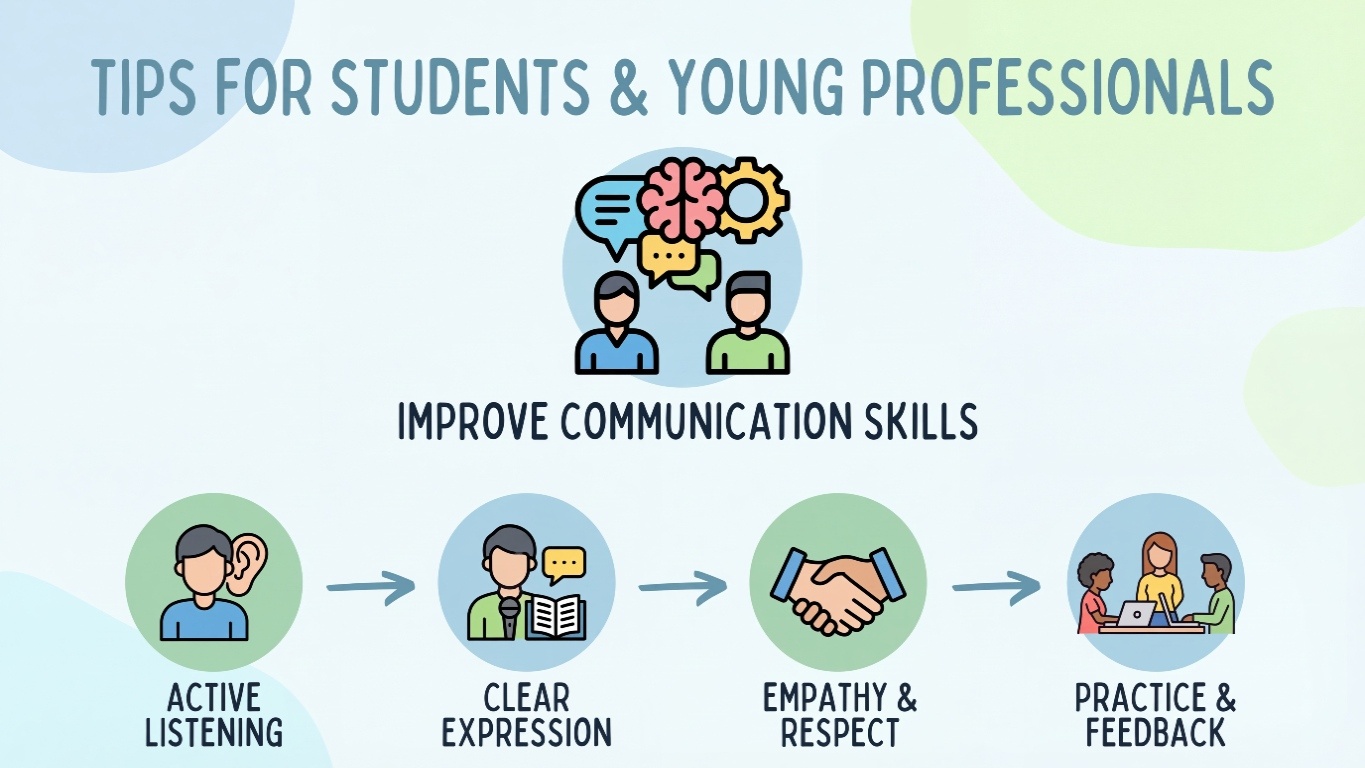
👂 2. Become an Active Listener

Good communication is not just about speaking—it’s also about listening.

How to Practice Active Listening:

  • Maintain eye contact
  • Don’t interrupt
  • Ask questions
  • Repeat key points to show understanding

This skill helps in teamwork, relationships, and interviews.

📘 3. Improve Your Vocabulary

A strong vocabulary helps you express ideas more clearly.

Easy Ways to Build Vocabulary:

  • Read books, blogs, and newspapers
  • Learn 3–5 new words daily
  • Use apps like Duolingo or Vocabulary.com
  • Write sentences using new words

📝 4. Strengthen Your Writing Skills

Writing is equally important—especially for emails, assignments, and professional communication.

Tips to Improve Writing:

  • Write short paragraphs daily
  • Use simple, clear language
  • Avoid grammatical mistakes
  • Use tools like Grammarly
  • Practice email writing

😌 5. Work on Body Language

Non-verbal communication says more than words.

Key Body Language Tips:

  • Stand straight
  • Use hand gestures naturally
  • Maintain eye contact
  • Smile politely
  • Avoid crossing arms (it shows defensiveness)

Good body language increases your confidence and makes communication smoother.

🎙 6. Practice Public Speaking

Public speaking boosts confidence like nothing else.

Ways to Practice:

  • Deliver small presentations in class
  • Speak in front of a mirror
  • Record your voice or video
  • Participate in debates, quizzes, or competitions

The more you practice, the more comfortable you become.

🧠 7. Understand Your Audience

Communication becomes effective when you know who you're talking to.

Examples:

  • Speak more formally in interviews
  • Be conversational with friends
  • Explain things simply when helping juniors

Adjust your tone based on the situation.

📱 8. Reduce Screen Distractions

Constant phone usage affects attention span and communication quality.

Tips:

  • Keep your phone away during conversations
  • Maintain eye contact instead of checking notifications
  • Use communication apps wisely (email, WhatsApp, LinkedIn)

🤝 9. Build Confidence Step-by-Step

Confidence is not built overnight. It grows with practice.

How to boost confidence:

  • Prepare before speaking
  • Practice breathing exercises
  • Start with small conversations
  • Celebrate small improvements

Confidence transforms your communication style.

📖 10. Read More to Think Better

Reading directly improves communication by enhancing:

  • Vocabulary
  • Imagination
  • Critical thinking
  • Focus

Recommended reads:

  • “How to Win Friends & Influence People”
  • “The Magic of Thinking Big”
  • Blogs, articles, and short stories

🧩 11. Learn to Handle Feedback

Good communicators accept feedback gracefully.

How to use feedback:

  • Listen without getting defensive
  • Identify areas for improvement
  • Work on suggestions
  • Track your progress

Feedback is an opportunity—not criticism.

💬 12. Practice Clear and Simple Communication

Avoid long or confusing sentences.

Remember:

Clear > Fancy
Simple > Complicated

Your goal is to be understood, not to impress.

🧭 Conclusion: Communication Is a Skill—You Can Learn It

Communication is not a talent you are born with.
It is a skill anyone can learn, practice, and master.

Start small:

  • Speak a little more
  • Listen a little better
  • Read a little daily
  • Write a little regularly

Over time, you’ll see transformation in your confidence, personality, and career opportunities.

Better communication = better career + better relationships + better life.