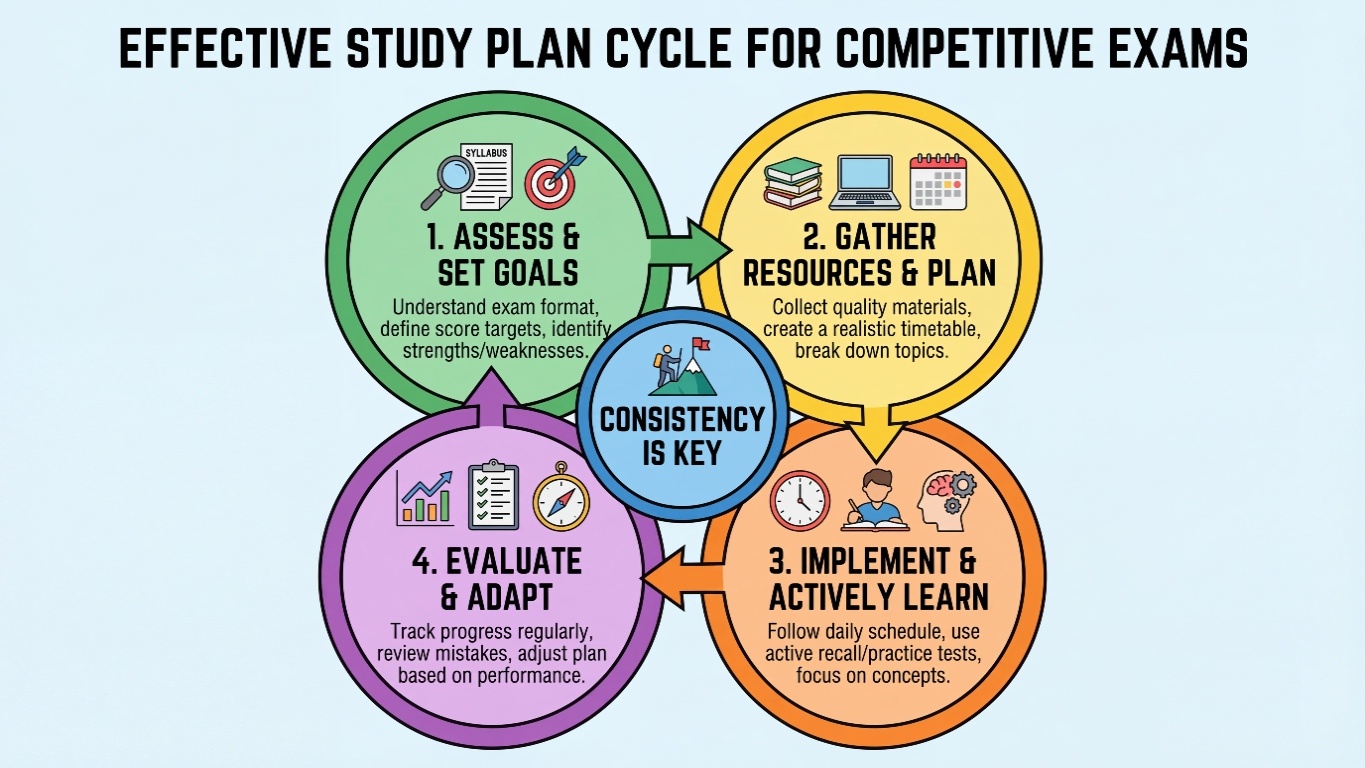
How to Create an Effective Study Plan for Any Competitive Exam
Preparing for a competitive exam can feel overwhelming—so many subjects, limited time, and constant pressure to perform. Whether you’re preparing for CUET, SSC, Banking, Defence exams, State PSC, Railway, or any other competitive exam, the right study plan can make all the difference.
This student-friendly guide will help you create a smart, realistic, and effective study plan that actually works. Let’s get started! 🚀
Why a Study Plan Is Important for Competitive Exams 📘
A well-structured study plan helps you:
✅ Stay organized and focused
✅ Cover the entire syllabus on time
✅ Balance multiple subjects easily
✅ Reduce stress and avoid last-minute panic
✅ Improve consistency and confidence
Remember: Hard work without a plan is wasted effort. Smart planning leads to success.
Step 1: Understand the Exam Completely 🧐
Before opening any book, understand what you’re preparing for.
Check These Key Points:
📌 Exam pattern (number of sections & marks)
📌 Syllabus (topics and sub-topics)
📌 Negative marking (if any)
📌 Duration of the exam
📌 Previous years’ question trends
💡 Tip: Download the official syllabus and keep it printed or bookmarked.
Step 2: Know Your Strengths & Weaknesses 💪⚠️
Every student is different. Your study plan should be personalized.
Do a Self-Assessment:
Which subjects are strong?
Which topics are difficult?
How many hours can you realistically study daily?
📝 Write down:
Strong subjects → Less time, regular revision
Weak subjects → More time, concept clarity first
Step 3: Set Clear & Achievable Goals 🎯
Don’t say “I will study all day”. Instead, set specific goals.
Examples of Smart Goals:
❌ Study Maths
✅ Complete Percentage chapter + 30 questions
❌ Revise GK
✅ Revise Modern History (1857–1947)
Break your preparation into:
📅 Daily goals
📆 Weekly targets
📊 Monthly milestones
Step 4: Create a Realistic Daily Study Schedule ⏰
A good study plan fits into your life, not someone else’s routine.
Ideal Daily Study Structure:
🧠 Difficult subject → Morning (fresh mind)
📘 Medium subject → Afternoon
📝 Revision / practice → Evening
🧪 Mock test / analysis → Alternate days
Time
Activity
6:00–7:30 AM
Concept study
10:00–11:00 AM
Practice questions
4:00–5:00 PM
Second subject
8:00–9:00 PM
Revision / notes
💡 Quality matters more than quantity.
Step 5: Divide Syllabus into Small Chunks 🧩
Large syllabus = panic 😨 Small tasks = confidence 😄
How to Break It:
Subject → Chapters → Topics → Sub-topics
Study one small topic at a time
Finish it completely (concept + practice)
This method improves:
✔ Retention
✔ Accuracy
✔ Motivation
Step 6: Follow the 50–30–20 Study Rule 📊
For effective learning, divide your time wisely:
🔵 50% – Learning new concepts
🟢 30% – Practice questions
🟠 20% – Revision & error analysis
Skipping revision is the biggest mistake students make. Don’t do it!
Step 7: Include Mock Tests in Your Study Plan 🧪
Mock tests are not optional—they are mandatory.
Why Mock Tests Matter:
Improve speed & accuracy
Help manage exam pressure
Identify weak areas
Build exam temperament
Best Practice:
🗓 1 mock test per week (initial stage)
🗓 2–3 mocks per week (final months)
📉 Analyze every mock test properly
Step 8: Make Time for Revision (Non-Negotiable!) 🔁
Revision is the secret weapon of toppers 🏆
Smart Revision Strategy:
🗒 Short notes & formulas
📆 Weekly revision of studied topics
🔁 Monthly full syllabus revision
👉 Revise more, read less.
Step 9: Stay Flexible & Improve Your Plan 🔄
Your study plan is not permanent. Improve it regularly.
If something isn’t working → change it
If a subject needs more time → adjust schedule
Learn from mock test performance
📌 A flexible plan is more powerful than a perfect plan.
Step 10: Take Care of Your Health & Mind 🧠💤
No plan works if you are exhausted.
Healthy Study Habits:
💤 7–8 hours of sleep
🥗 Healthy food & hydration
🚶 Short breaks & light exercise
📵 Limit mobile & social media
A fresh mind learns faster and remembers longer.
Common Mistakes to Avoid ❌
Studying without a timetable
Ignoring revision
Too many resources, no practice
Copying someone else’s routine
Avoiding mock tests due to fear
Final Thoughts 🌟
Creating an effective study plan is not about studying all day—it’s about studying smart every day. Consistency, clarity, and confidence are your biggest allies.
📌 Start small. Stay regular. Trust the process.
If you follow the right plan with discipline, any competitive exam is achievable. 💯