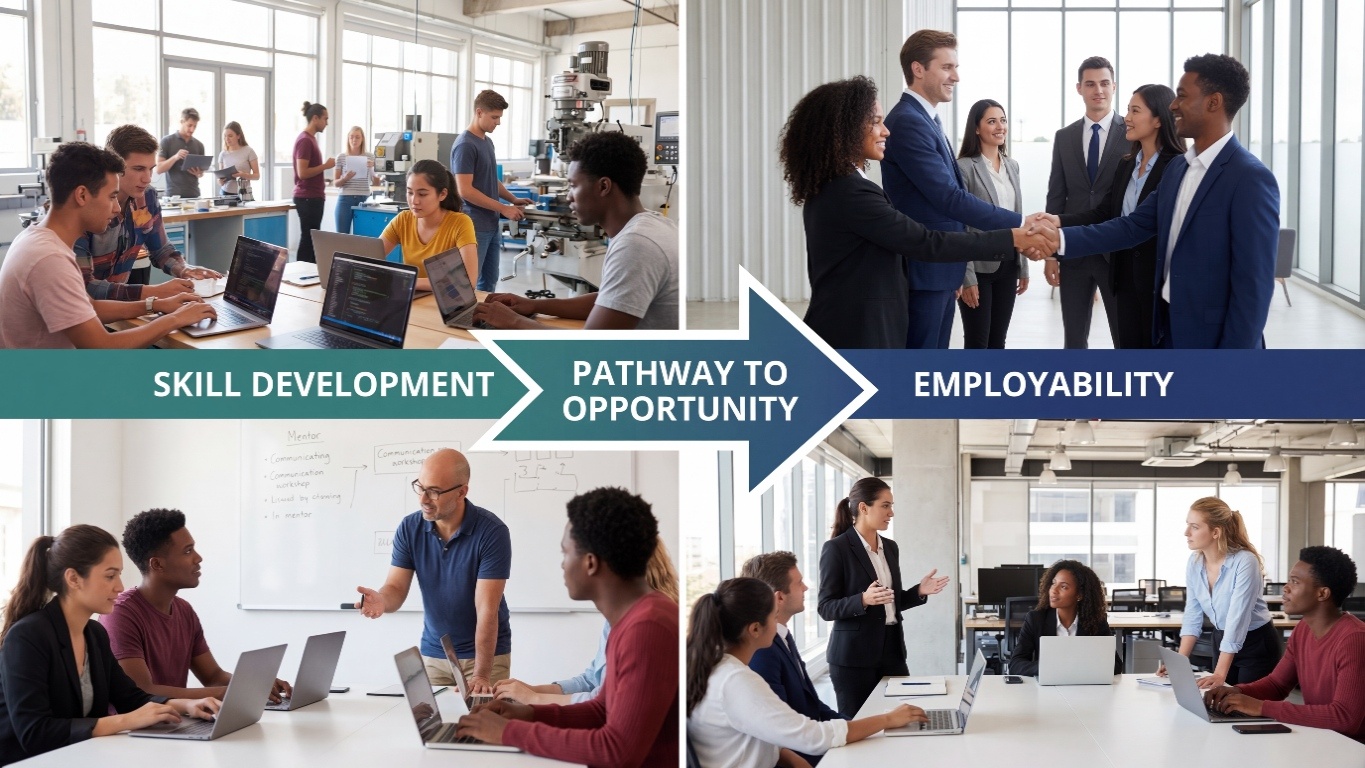
Landing your first job after graduation can feel like an uphill battle. You've got the degree, the enthusiasm, and the drive—but employers keep asking for "experience" and "industry-ready skills." Sound familiar? This is where skill development programs come in as your secret weapon. Let's explore how these programs can transform you from a fresh graduate into a job-ready professional.
Skill development programs are structured training initiatives designed to equip you with practical, job-specific abilities that employers actually look for. Unlike traditional academic courses that focus heavily on theory, these programs emphasize hands-on learning and real-world application.
Think of them as the bridge between your college education and your dream career. They can range from short-term certification courses to intensive bootcamps, covering everything from technical skills like coding and data analysis to soft skills like communication and leadership.
Here's a reality check: according to various industry reports, a significant percentage of graduates are considered "not employable" by companies. But why?
The education system often focuses on theoretical knowledge, while the job market demands practical skills. Employers want candidates who can hit the ground running, contribute from day one, and adapt to rapidly changing technologies. This mismatch creates the employability gap—and skill development programs are specifically designed to fill it.
The tech world moves fast. The programming language or tool that was cutting-edge two years ago might be outdated today. Skill development programs keep you current with what industries actually use.
Whether you're learning Python for data science, Figma for UI/UX design, or advanced Excel for business analytics, these programs teach you the tools and technologies that appear in job descriptions. You're not just learning concepts—you're gaining hands-on experience with industry-standard software and frameworks.
Remember that "experience required" line in job postings? Skill development programs help you build exactly that through project-based learning. You'll work on real-world scenarios, case studies, and industry projects that you can showcase in interviews.
Many programs include capstone projects, internships, or live client work. This practical exposure gives you stories to tell in interviews and tangible proof of your abilities to show potential employers.
Technical knowledge alone won't land you the job. Employers increasingly value soft skills like communication, teamwork, problem-solving, and time management. The best skill development programs integrate these into their curriculum.
You'll learn how to present your ideas confidently, collaborate effectively in teams, handle workplace pressure, and communicate professionally. These are the skills that help you not just get hired, but actually succeed in your career.
Certifications add serious weight to your resume. They're concrete proof that you've mastered specific skills and committed to professional development. Industry-recognized certifications from platforms like Google, Microsoft, AWS, or specialized training institutes can set you apart from hundreds of other applicants.
These credentials act as validation of your abilities, especially when you lack traditional work experience. They tell employers, "I've invested time and effort into becoming job-ready."
One of the biggest advantages of skill development programs is helping you create a portfolio that showcases your work. Whether you're a designer, developer, writer, or marketer, having a portfolio of projects demonstrates your capabilities better than any resume bullet point.
You'll graduate from these programs with completed projects, code repositories, design samples, or case studies that prove you can deliver results—not just discuss theories.
Every industry has its own standards, workflows, and best practices. Skill development programs expose you to these professional norms, teaching you how things actually work in the business world.
You'll learn about agile methodologies in software development, design thinking in product management, or quality control processes in manufacturing. This industry awareness makes you a more attractive candidate who understands workplace culture and expectations.
Many skill development programs connect you with industry professionals through guest lectures, mentorship opportunities, and alumni networks. These connections can be invaluable when you're job hunting.
A recommendation from a program mentor or a connection made during a workshop can open doors that online applications simply can't. Plus, you'll be part of a peer community facing similar career challenges, creating a support system for your professional journey.
These typically last from a few weeks to a few months and focus on specific skills. Perfect if you want to quickly upskill in a particular area like digital marketing, graphic design, or basic programming.
Intensive, immersive programs (usually 3-6 months) that transform you into job-ready professionals in fields like coding, data science, or UX design. They're demanding but highly effective.
Many governments offer subsidized or free skill training through initiatives aimed at improving youth employability. These programs often include placement assistance and are industry-aligned.
Platforms like Coursera, Udemy, LinkedIn Learning, and edX offer thousands of courses with flexible schedules. Great for self-paced learning and earning certifications from top universities and companies.
Some companies offer internship-to-employment programs where they train freshers in required skills before offering full-time positions. These are excellent opportunities to learn and earn simultaneously.
With so many options available, how do you pick the right one? Consider these factors:
Align with Your Career Goals: Choose programs that directly support the career path you want to pursue. Research job descriptions in your target field to identify in-demand skills.
Check Industry Recognition: Look for programs with certifications that employers recognize and value. Read reviews and check the success stories of past participants.
Evaluate the Curriculum: Ensure the program offers practical, project-based learning—not just theoretical lectures. The more hands-on experience, the better.
Consider Time and Budget: Be realistic about what you can commit. A program is only valuable if you can complete it successfully.
Look for Placement Support: Programs that offer career counseling, resume building, interview preparation, and job placement assistance provide extra value beyond just skill training.
Enrolling in a program is just the first step. Here's how to get the most out of it:
Stay Consistent: Treat your skill development program like a job. Show up, complete assignments on time, and engage actively with the material.
Build as You Learn: Don't wait until the end to start creating portfolio pieces. Document your learning journey and showcase your progress.
Network Actively: Connect with instructors, mentors, and fellow learners. Engage in program communities and attend networking events.
Apply Immediately: Look for opportunities to apply your new skills—through freelancing, volunteering, or personal projects. Application reinforces learning.
Keep Learning: Technology and industries evolve constantly. Develop a habit of continuous learning that extends beyond any single program.
Countless freshers have transformed their careers through skill development programs. Computer science graduates who couldn't find jobs have become successful full-stack developers after coding bootcamps. Arts students have launched careers in digital marketing after certification courses. Engineering graduates have pivoted to data science roles after targeted training programs.
The common thread? They recognized that their degree was a starting point, not the finish line. They invested in themselves, acquired market-relevant skills, and positioned themselves as valuable assets to employers.
In today's competitive job market, skill development programs aren't just nice to have—they're essential for freshers who want to stand out. They bridge the gap between academic knowledge and industry requirements, giving you the practical skills, confidence, and credentials that employers seek.
Your degree opened the door to opportunities, but skill development programs equip you to walk through that door successfully. Whether you're struggling to land interviews or want to enter a competitive field, investing time in the right training program can be the game-changer in your career journey.
The job market rewards those who are prepared, adaptable, and continuously learning. Skill development programs help you become exactly that kind of professional. So take that first step, choose a program that aligns with your goals, and invest in your most valuable asset—yourself.