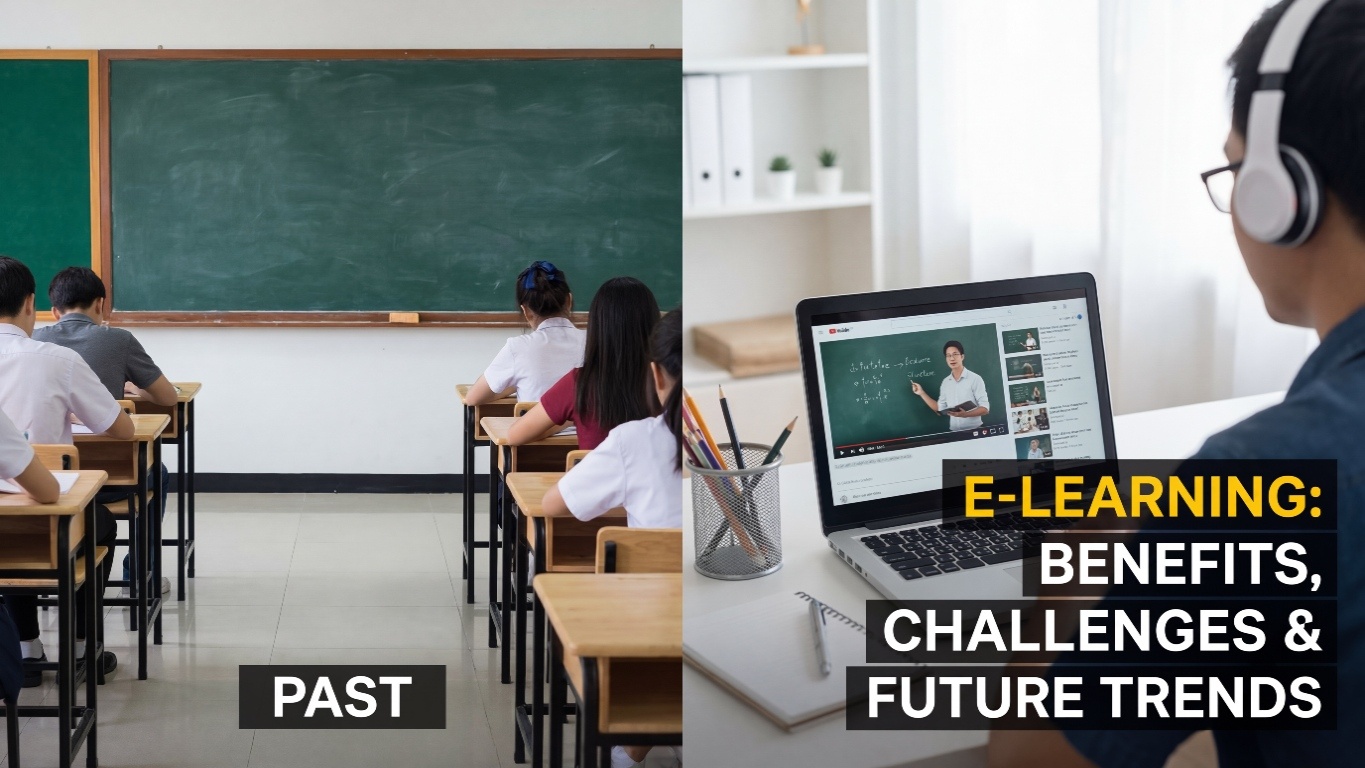
Education is undergoing a major transformation—and e-learning is at the heart of this change. From online classes to digital study materials and virtual classrooms, learning today is more flexible, accessible, and technology-driven than ever before.
Whether you're a school student, college learner, or working professional, e-learning has opened new opportunities to learn anytime, anywhere.
In this blog, we’ll explore how e-learning is changing education, its benefits, challenges, and the exciting future trends that will shape learning in the years ahead.
E-learning refers to studying through digital platforms, such as:
E-learning allows students to learn from home, at their own pace, using laptops or smartphones.
E-learning has completely changed the way students and teachers interact. Here’s how:
Students can now:
This flexibility makes education more accessible for everyone.
Every student learns differently.
E-learning platforms allow:
Students can revisit difficult topics as many times as needed.
Thanks to online platforms like Coursera, Udemy, BYJU’S, and Khan Academy, students now have access to:
Learning has become limitless.
E-learning uses:
This makes learning fun and improves understanding.
Online courses are often cheaper than offline coaching or tuition.
Students save money on:
Even premium certification courses offer EMI options or scholarships.
Teachers and students can monitor:
This makes performance improvement more structured and data-driven.
Even though e-learning is powerful, it comes with certain challenges students must overcome.
Online learning requires students to stay focused on their own.
Distractions like social media and games can affect productivity.
Not all students have access to:
This creates a digital divide.
Students miss:
This can affect communication skills and emotional development.
Excessive screen time leads to:
Proper breaks and posture are important.
Subjects like:
are hard to teach fully online.
The future of education is exciting, innovative, and deeply technology-driven. Let’s look at upcoming trends:
AI will help:
Students can learn through virtual labs, 3D models, and immersive simulations.
Example:
Medical students can practice surgeries using VR.
Future platforms will use:
to make learning engaging and fun.
Short 5–15 minute lessons will become more common, helping students learn faster and retain information better.
Schools and colleges will adopt blended learning, combining:
This gives the best of both worlds.
Students from different countries will study together through virtual classrooms, boosting cultural understanding and global exposure.
Here are simple tips to study effectively online:
E-learning is not just a temporary trend—it is transforming how the world learns.
With flexibility, accessibility, personalized learning, and global opportunities, e-learning empowers students to take control of their education.
Yes, it has challenges, but with the right habits, tools, and discipline, students can make e-learning a powerful part of their academic and career journey.
The future of education is digital—and the students who adapt will lead the way.