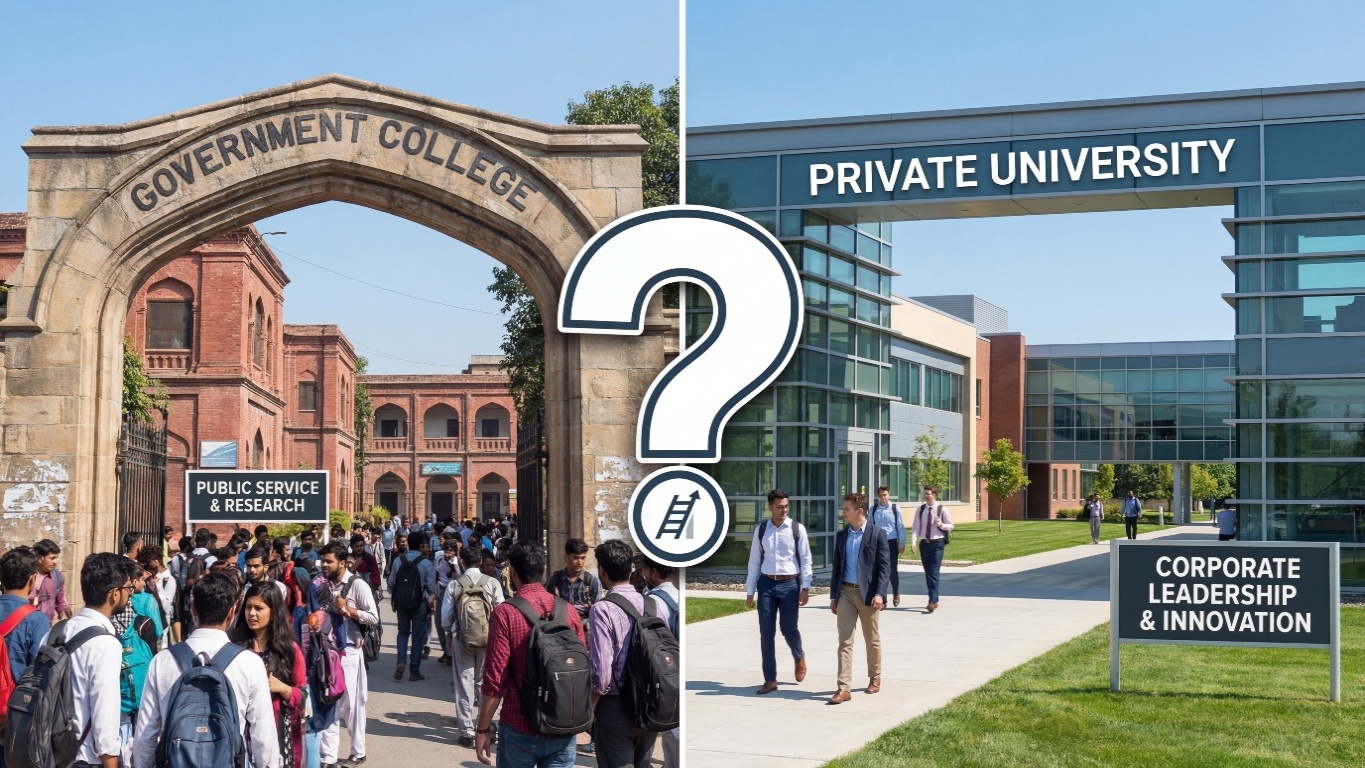
Hey students! Picking the right college feels like choosing between pizza or burgers—both can be awesome, but it depends on your taste (and budget). Government colleges are run by the state, while private ones are managed by independent organizations. Both can launch your career, but which one's better for you? Let's break it down step by step.
Government colleges, like IITs, AIIMS, or state universities, are backed by public funding. They're often seen as the "safe bet" for many students.
Tuition is dirt cheap—sometimes just a few thousand rupees a year. No massive loans hanging over your head post-graduation.
Degrees from places like Delhi University or NITs carry huge weight with employers. Many have strong alumni networks and campus placements from giants like Google or TCS.
You'll meet people from all backgrounds, building real-world skills like teamwork across cultures.
But heads up: competition is fierce (think JEE-level exams), seats are limited, and infrastructure might feel outdated in some spots.
Private colleges, such as VIT, Manipal, or Amity, charge more but pack a punch in modern perks. They're like the flashy new smartphone—pricey but feature-loaded.
State-of-the-art labs, AC classrooms, and industry tie-ups mean hands-on learning. Many offer multiple streams, electives, and even international exchanges.
Entrance exams are often less cutthroat, and they hustle for placements—think 90%+ rates with companies like Infosys or Deloitte. Some even guarantee jobs.
Smaller classes mean professors actually know your name, plus extras like internships and skill workshops.
Downside? Fees can hit lakhs per year, and not all privates are equal—research accreditation to avoid duds.
| Factor | Government Colleges | Private Colleges |
|---|---|---|
| Fees | Low (₹5k-50k/year) | High (₹1-5 lakhs/year) |
| Admission | Tough entrance exams | Easier, sometimes direct entry |
| Faculty | Experienced, but overloaded | Young, industry pros |
| Infrastructure | Basic to good | Modern, world-class |
| Placements | Strong for top ones (80-95%) | High focus (85-100%), urban edge |
| Campus Life | Diverse, vibrant but crowded | Fun events, hostels, global vibe |
This table shows it's not black-and-white—government shines in value, privates in speed.
Your college pick influences jobs, salary, and growth, but it's not everything.
Government grads often start with respected tags and decent packages (₹5-15 LPA). Privates fast-track you into corporate roles with perks like training programs.
Both build skills, but privates might edge in soft skills and networks for entrepreneurship. Example: A DU commerce grad lands banking jobs easily; a private BBA student networks into startups quicker.
Meet Ravi: Government engineering grad, low debt, now at ISRO. Vs. Priya: Private MBA, high fees but startup job at 20 LPA right after.
Stats back it: NIRF rankings show top government colleges dominate, but privates like BITS Pilani rival them in employability.
No one-size-fits-all—ask yourself:
Pro tip: Check NAAC/NIRF ratings, alumni reviews on LinkedIn, and visit campuses.
Neither is "better"—government offers unbeatable value and prestige if you crack the entrance, while privates deliver speed, facilities, and flexibility at a cost. Focus on your goals, strengths, and finances. Many succeed from both!
What matters most? Your hustle post-college. Start building skills now—internships, projects, certifications.
Ready to choose? Drop your stream or location for personalized tips!