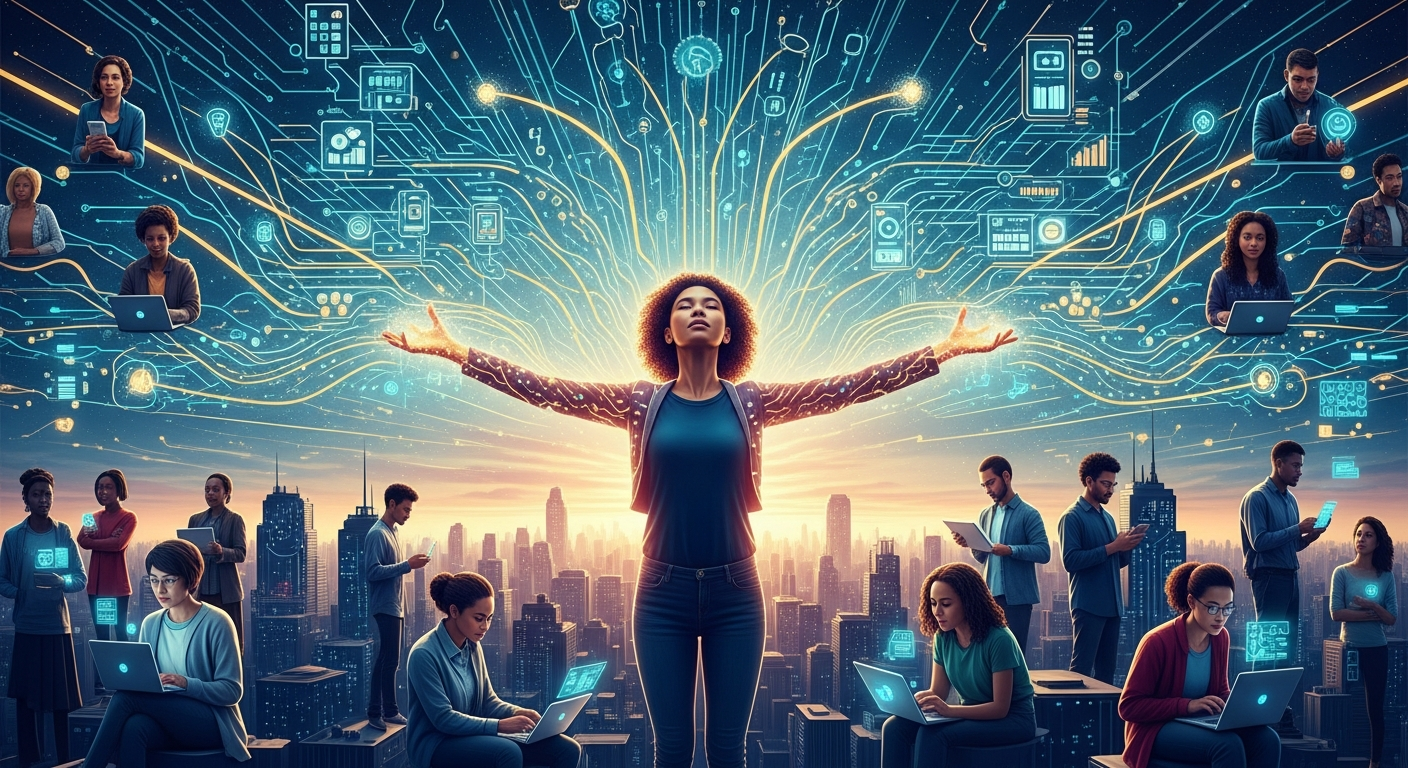
Remember when career options seemed limited to what your parents did or what was available in your neighborhood? Those days are gone. Today's youth are stepping into a world where a laptop and internet connection can open doors to careers that didn't even exist a decade ago.
Technology isn't just changing how we work—it's completely transforming what work means for young people. Let's explore how digital tools are empowering the next generation to build careers on their own terms.
Gone are the days when success meant following a single, straight path: school, college, job, retirement. Today's career landscape looks more like a choose-your-own-adventure story.
Technology has democratized access to opportunities. Whether you're in Mumbai or a small town in Uttar Pradesh, you can now access the same learning resources, job opportunities, and professional networks as someone in Silicon Valley. The playing field isn't perfectly level yet, but it's more balanced than ever before.
Platforms like Upwork, Fiverr, and Freelancer have created a global marketplace for skills. Students can start earning while still in college, building real-world experience that no textbook can provide. You don't need to wait for someone to hire you—you can start offering your skills today.
The explosion of online learning has been nothing short of revolutionary. Platforms are putting world-class education in everyone's pocket:
Coursera and edX offer courses from top universities like Stanford and MIT. Many are free, and even the paid certifications cost a fraction of traditional tuition.
YouTube has become an informal university where you can learn anything from coding to graphic design, often taught by industry professionals who genuinely want to share their knowledge.
Udemy and Skillshare provide affordable, practical courses on specific skills. Want to learn video editing? Social media marketing? App development? There's a course for that.
Khan Academy offers free education for students at all levels, making quality learning accessible to everyone regardless of economic background.
Technology careers aren't just for computer science majors anymore. The field has expanded to include:
The best part? You can learn most of these skills through online resources, often for free or at minimal cost.
The pandemic accelerated a trend that was already building: remote work. For young people, this means:
Students in tier-2 and tier-3 cities can now compete for the same positions as those in metros, judged purely on their skills and output.
Social media has turned creativity into currency. Platforms like YouTube, Instagram, and TikTok have created an entirely new career path: content creator.
Today's students can build audiences around their passions—whether that's cooking, gaming, education, comedy, or technology reviews. What starts as a hobby can evolve into a full-fledged business with multiple revenue streams: ad revenue, sponsorships, merchandise, and more.
Starting a business used to require significant capital and physical infrastructure. Not anymore.
Platforms like Shopify, Amazon, and Flipkart allow young entrepreneurs to start selling products with minimal investment. Dropshipping models mean you don't even need inventory. Print-on-demand services let you create custom products without manufacturing costs.
Social commerce through Instagram and WhatsApp is enabling students to start small businesses from their dorm rooms, turning creative ideas into income streams.
Have an idea for an app? You can learn to build it yourself through free online tutorials. Platforms like Flutter and React Native make it easier than ever to create apps that work on both iPhone and Android.
The app stores have democratized distribution. You don't need a publisher or distributor—just build something people want, and they can download it instantly.
While not everyone needs to be a programmer, basic technical literacy is becoming essential:
Technology doesn't replace soft skills—it amplifies their importance:
Communication matters more than ever when you're working with teams across time zones via Slack or Zoom. Being clear, concise, and empathetic in digital communication is crucial.
Adaptability is essential in a world where new tools and platforms emerge constantly. The ability to learn quickly and embrace change is invaluable.
Self-motivation becomes critical when you're working remotely or freelancing. Nobody's watching over your shoulder—you need internal drive.
Digital collaboration means knowing how to work effectively with others using tools like Google Workspace, Notion, or Trello.
One of the most beautiful aspects of digital empowerment is its accessibility. You don't need expensive equipment to get started:
Creating an online portfolio or presence is easier than ever:
Your digital presence becomes your resume, often more powerful than a traditional CV because it shows what you can actually do.
You don't need to know industry professionals personally to learn from them. The internet has created new mentorship models:
Young people worldwide are proving that digital empowerment isn't just theory—it's creating real opportunities:
Students are building successful YouTube channels while in college, earning more than entry-level jobs would pay. Teenagers are creating apps that solve real problems and attracting investment. Young freelancers are working with international clients, building portfolios that land them dream jobs.
The pattern is clear: learn a valuable skill, showcase it online, connect with others, and opportunities follow.
You don't need to quit school or make dramatic life changes. Start small:
Consistency beats intensity. Thirty minutes of focused learning daily compounds into serious skills over months:
Theory only takes you so far. Real learning happens when you build actual things:
Technology has lowered barriers to entry for countless careers, but it hasn't eliminated the need for hard work, dedication, and continuous learning. The opportunity is there, but it still requires you to reach out and grab it.
The beautiful thing about digital empowerment is that it's not winner-take-all. There's room for everyone. Your unique perspective, background, and creativity are assets in a global digital economy that values diversity and innovation.
We're living in an unprecedented time for young people entering the workforce. Technology has created opportunities that previous generations could only dream about. You can learn from the world's best teachers, work for global companies, start businesses with minimal capital, and build careers around your passions.
The question isn't whether technology can help you unlock new career opportunities—it's whether you'll take advantage of the tools available to you.
Your career journey is uniquely yours. Technology has given you the map, the compass, and the vehicle. Where you go is up to you.
The future isn't something that happens to you—it's something you create, one skill, one project, one connection at a time. Start today. Start small. Start where you are with what you have.
The digital world is waiting for what only you can contribute.