
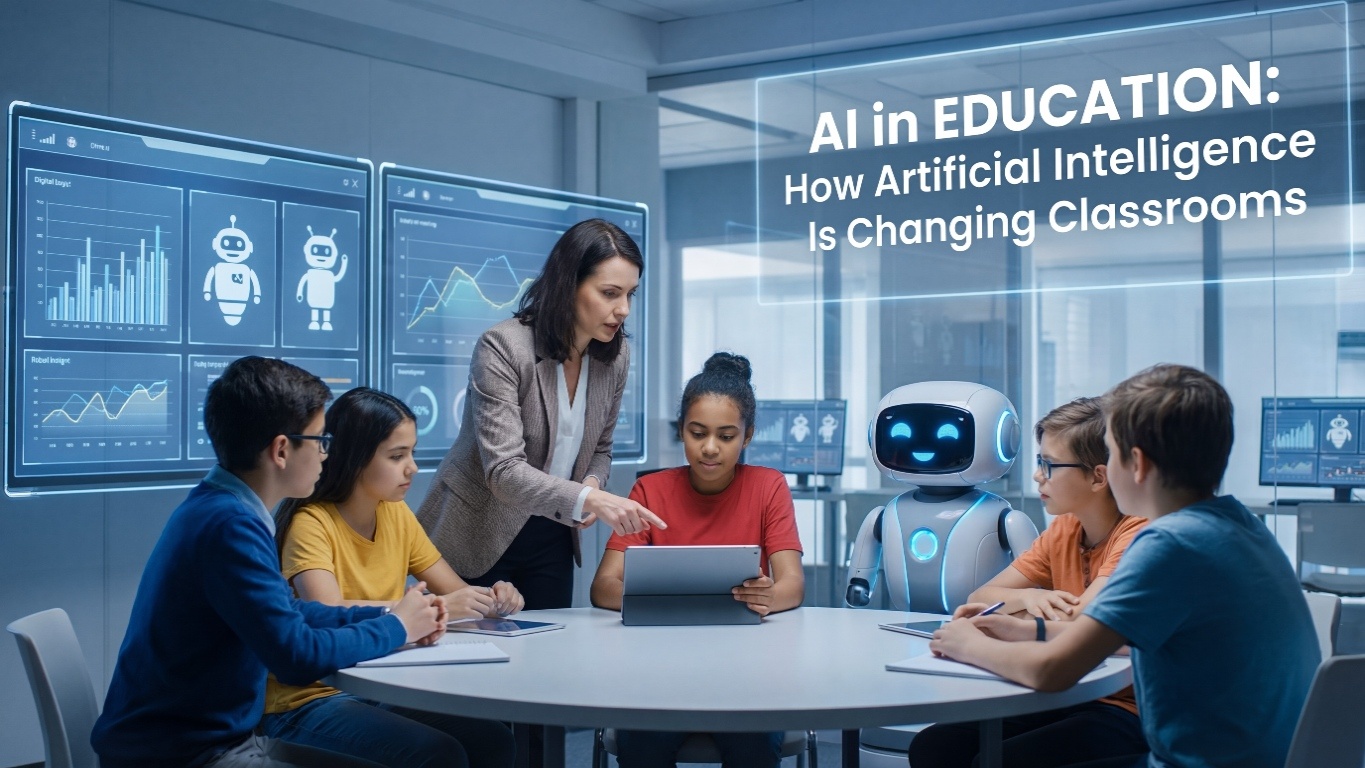
Artificial Intelligence (AI) is no longer just a buzzword from science fiction movies—it is already transforming our classrooms. From smart learning apps to AI-powered teachers’ assistants, education is becoming more personalized, interactive, and efficient.
In this student-friendly guide, let’s explore what AI in education really means, how it is changing classrooms, and what it means for students and teachers in the future.
Artificial Intelligence in education refers to the use of smart machines and software that can think, learn, and make decisions like humans. These systems analyze data, understand patterns, and improve themselves over time.
In classrooms, AI helps:
In simple words, AI acts like a smart assistant for both students and teachers.
Traditional classrooms follow a one-size-fits-all approach. But every student learns differently—some learn fast, some need more time.
AI helps solve this problem by:
AI analyzes student performance and creates custom learning paths.
Benefits:
This makes learning fair, inclusive, and stress-free.
AI-powered chatbots act like 24/7 virtual teachers.
They help students by:
Students no longer have to wait for the next class to clear their doubts.
AI can check:
Advantages:
Teachers can focus more on teaching and mentoring instead of paperwork.
Many learning platforms use AI to improve learning experience by:
These apps make learning:
AI helps students with disabilities by offering:
This ensures equal learning opportunities for all students.
AI does not replace teachers—it empowers them.
AI helps teachers by:
Teachers become mentors and guides, not just lecturers.
Despite its benefits, AI also has challenges:
Many schools lack funds to implement AI tools.
Not all students have access to devices and internet.
Student data must be protected carefully.
Human interaction and emotional learning are still essential.
The future classroom may include:
Students will need to develop:
Students should:
AI is a tool—how you use it will define your success.